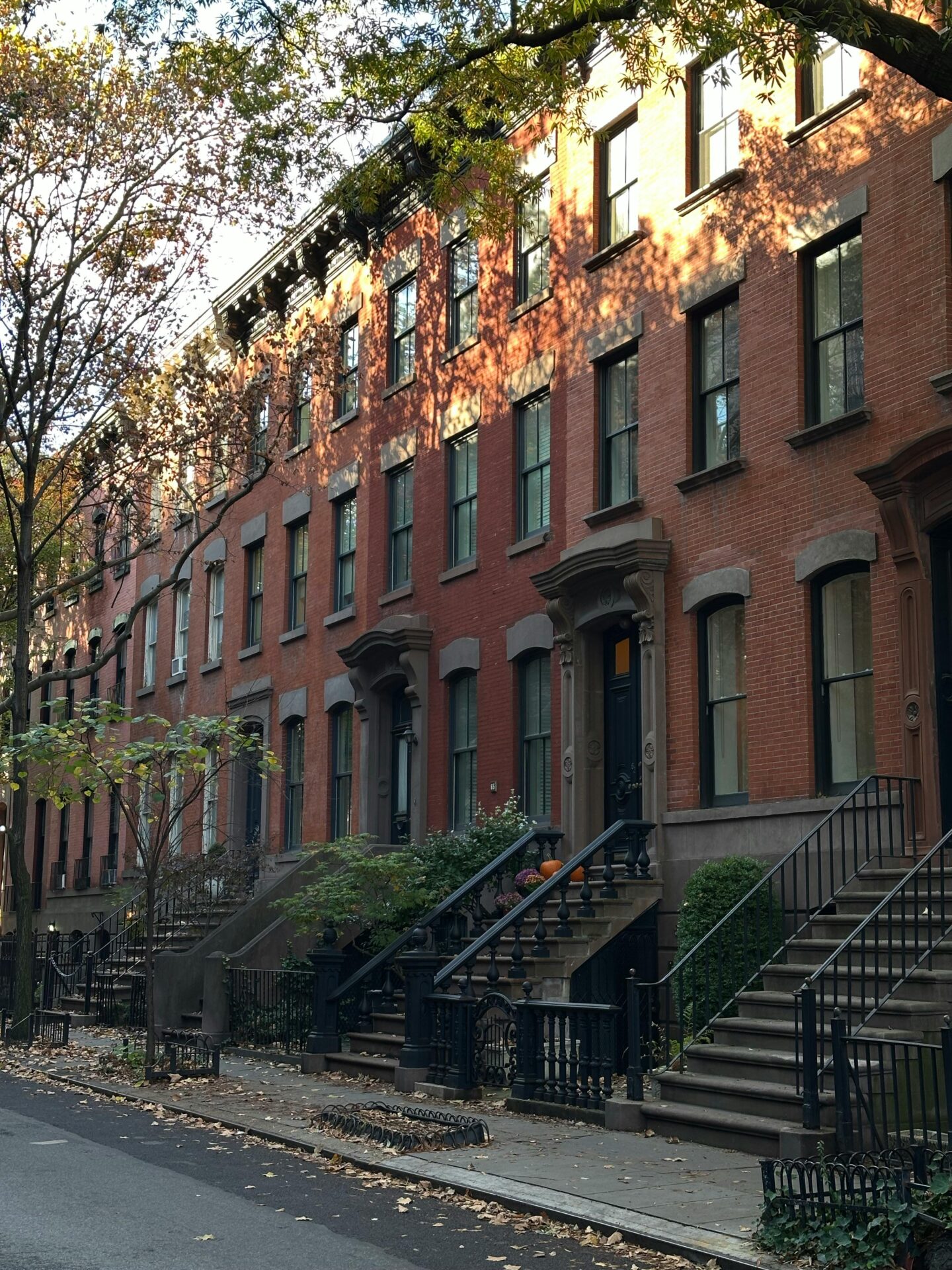
Brooklyn brownstones are beautiful, historic – and notoriously tricky to move out of. Narrow staircases, multiple floors, high ceilings, and original hardwood floors that scratch easily all make packing more complex than in a typical apartment. A room-by-room strategy tailored to brownstone layouts helps you stay organized, protect your home, and avoid move-day chaos.
Before You Start: Brownstone Prep Work
Begin with a walkthrough of every floor, from garden level to top floor, and create a realistic plan.
- Declutter room by room: Start at the top floor and work down. Create three categories in each room: keep, donate/sell, recycle/trash. Pay special attention to overstuffed closets, under-bed storage, and linen cabinets – they fill boxes fast and add weight for steep stair carries.
- Get the right supplies: Use small and medium boxes more than large ones so they’re easier to carry up and down stairs. Add heavy-duty tape, bubble wrap, packing paper, stretch wrap, furniture blankets, and corner protectors for railings and door frames.
- Create a multi-floor labeling system: Label every box with floor + room + short contents (e.g., “3F – Main Bedroom – Winter Clothes”). Use a different color marker or tape for each floor so movers know instantly where to go.
Kitchen: The Most Delicate Room
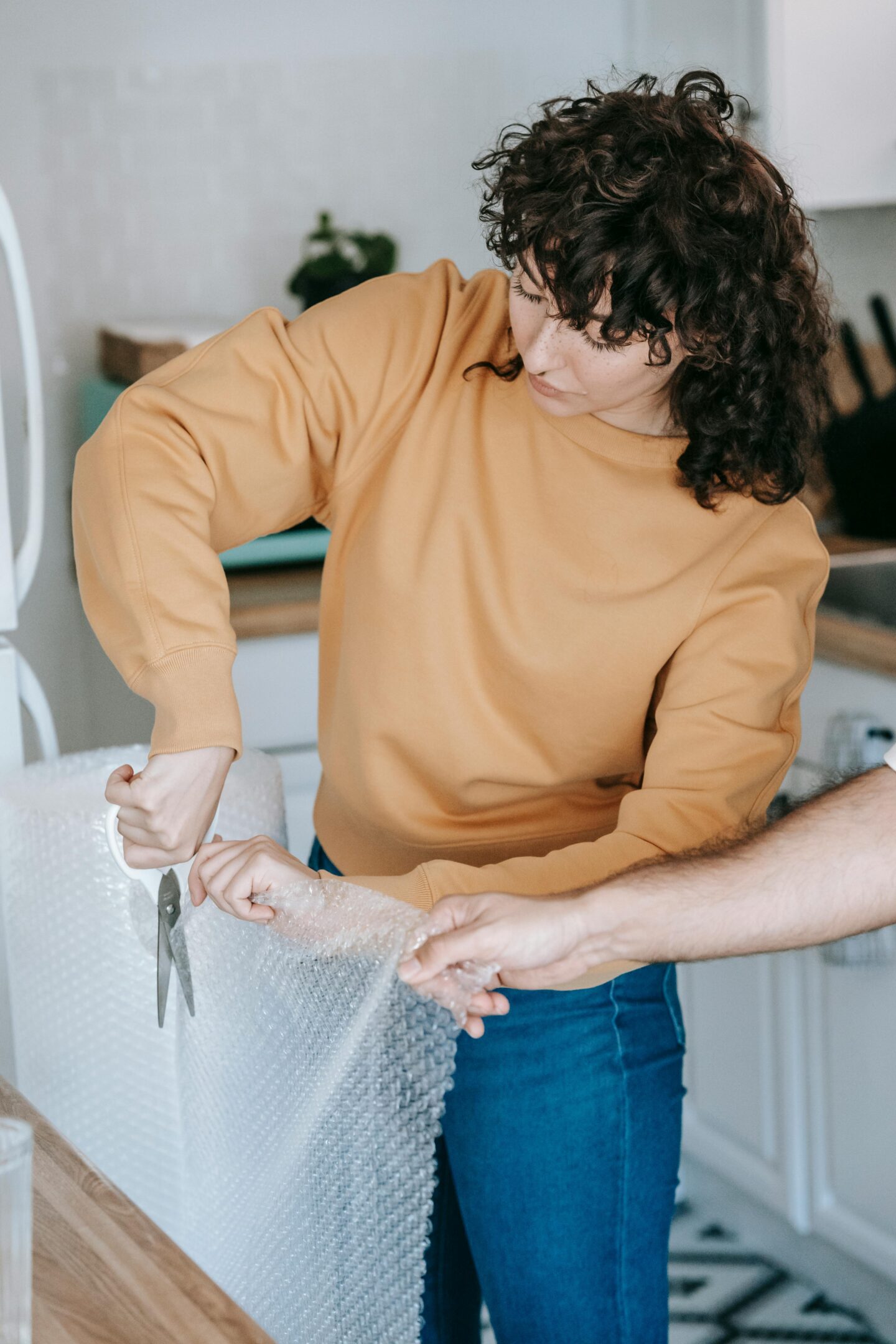
The kitchen typically takes the longest to pack, so start early.
- Fragile items (glass, dishes, stemware): Use small boxes, line bottoms with crumpled paper, and pack dishes vertically like records. Wrap each piece individually, filling gaps with paper or towels.
- Appliances: If you kept the original boxes, use them. Otherwise, wrap appliances in bubble wrap, secure cords with tape, and pack heavy items like mixers at the bottom of sturdy boxes.
- Pantry goods: Pack sealed, nonperishable food only. Use small boxes for cans; tape lids on jars and put them upright in plastic bags to prevent spills.
- What to pack first vs. last: First, pack infrequently used items (holiday platters, specialty gadgets). Leave everyday plates, utensils, and a few pots for last. Create a “first night” kitchen box with essentials like a pan, a few dishes, cutlery, dish soap, and a towel.
Living Room & Dining Room: Furniture And Oversized Pieces
These front-of-house rooms usually hold your bulkiest items, which must clear narrow brownstone stairs and tight turns.
- Furniture disassembly: Remove legs from tables and sofas when possible. Bag and label hardware, taping it securely to the underside or placing it in a clearly marked hardware box.
- Artwork and mirrors: Use picture boxes or sandwich each piece between two pieces of cardboard, then wrap in bubble wrap. Mark “Fragile” and “This Side Up” clearly.
- Rugs: Vacuum, then roll rugs tightly and secure with tape or twine. Use plastic wrap for delicate or antique rugs to keep them clean while they’re dragged over floors and down stairs.
- Oversized and awkward pieces: Measure stairwells, doorframes, and entryways. Some sectionals, hutches, or sideboards simply won’t clear tight Brooklyn staircases in one piece. This is where experienced full-service Brooklyn movers are invaluable; they deal with brownstone layouts daily and understand how to maneuver or partially disassemble large items without damaging walls or railings.
Bedrooms: Clothing, Beds, And Storage Furniture
Bedrooms can look simple but hide a surprising amount of stuff.
- Clothing: Use wardrobe boxes for hanging clothes to save time and reduce wrinkles. Off-season clothes can go in regular boxes or suitcases. Don’t overpack large boxes; clothing is lighter but still awkward on narrow stairs.
- Mattresses and bed frames: Use mattress bags to protect against dirt and scuffs on tight landings. Disassemble bed frames completely, label each piece, and tape hardware in a bag to the frame or box.
- Dressers and nightstands: Empty drawers if they’re heavy or if the furniture will be carried down multiple flights. Light, sturdy dressers can sometimes be moved with drawers in, but confirm with your movers.
- What to pack yourself vs. leave for movers: Pack personal documents, jewelry, medication, and daily electronics on your own. Many people also pack their own bedding and a “first night” bag with clothes and toiletries and let movers handle bulky frames, mattresses, and dressers.
Basement And Garden Level: Hidden Storage
Garden levels and basements in brownstones often become long-term storage zones.
- Bikes and sports gear: Clean and, if possible, partially disassemble bikes (remove pedals, turn handlebars). Use moving blankets to protect frames and walls.
- Seasonal storage: Sort holiday decor, off-season clothes, and sports gear. Declutter aggressively; donate what you haven’t used in years instead of hauling it up narrow stairs.
- Tools and hazardous items: Pack tools in small boxes or tool chests. Dispose of paint, solvents, and chemicals safely; many movers will not transport hazardous materials.
- Old boxes and long-forgotten items: Open every box. Repack in sturdy cartons if boxes are collapsing, and clearly label so these items don’t become mystery boxes in your next basement.
Move Day Tips Specific To Brownstones
A few brownstone-focused details can drastically cut down on damage and stress.
- Protect floors: Use floor runners, Ram Board, or cardboard paths on hardwood, especially near the entry and on high-traffic routes between rooms and stairs.
- Pad staircases and railings: Wrap banisters and tight corners with moving blankets and secure with tape or stretch wrap to prevent dents and paint chips.
- Plan for parking: Brooklyn streets are crowded and often permit-restricted. Check local regulations in advance and, if necessary, obtain temporary parking permits for the moving truck. Reserve space as close as possible to your stoop to minimize long carries.
- Stage items by floor: On move day, have boxes staged near entrances on each floor, with clear paths through hallways and stairwells. This keeps movers efficient and reduces trips up and down stairs.
Conclusion
Packing a Brooklyn brownstone is less about speed and more about strategy. Declutter carefully, label by floor and room, protect delicate architecture, and give special attention to kitchens, oversized furniture, and long-neglected basement storage. With a thoughtful room-by-room plan, you can navigate narrow staircases, multiple levels, and fragile finishes while setting yourself up for a smoother, less stressful move.
Thanks for stopping by!
Magda
xoxo
<3