Moving is one of the rare moments in life that forces you to hold every single thing you own and ask: does this deserve to come with me? Most people answer that question wrong – they pack everything, haul it to the new place, and spend the next two years unpacking boxes they should have thrown out before the truck pulled up.
Decluttering before a move isn’t just about having less to carry. It’s about arriving somewhere new without the dead weight of a life you’ve already outgrown. Here’s how to do it well.
Start Earlier Than You Think You Need To
The single biggest decluttering mistake is starting too late. When you’re three days from moving and surrounded by open boxes, every object suddenly feels worth keeping because making a decision takes time you no longer have. Ideally, begin decluttering six to eight weeks before your moving date.
Work room by room rather than category by category. The category method sounds logical in theory – pull every piece of clothing you own, evaluate it all at once – but in practice it creates an overwhelming physical and emotional avalanche. Tackling one room at a time gives you a clear sense of progress and a manageable daily workload.
Use The Four-Box Method
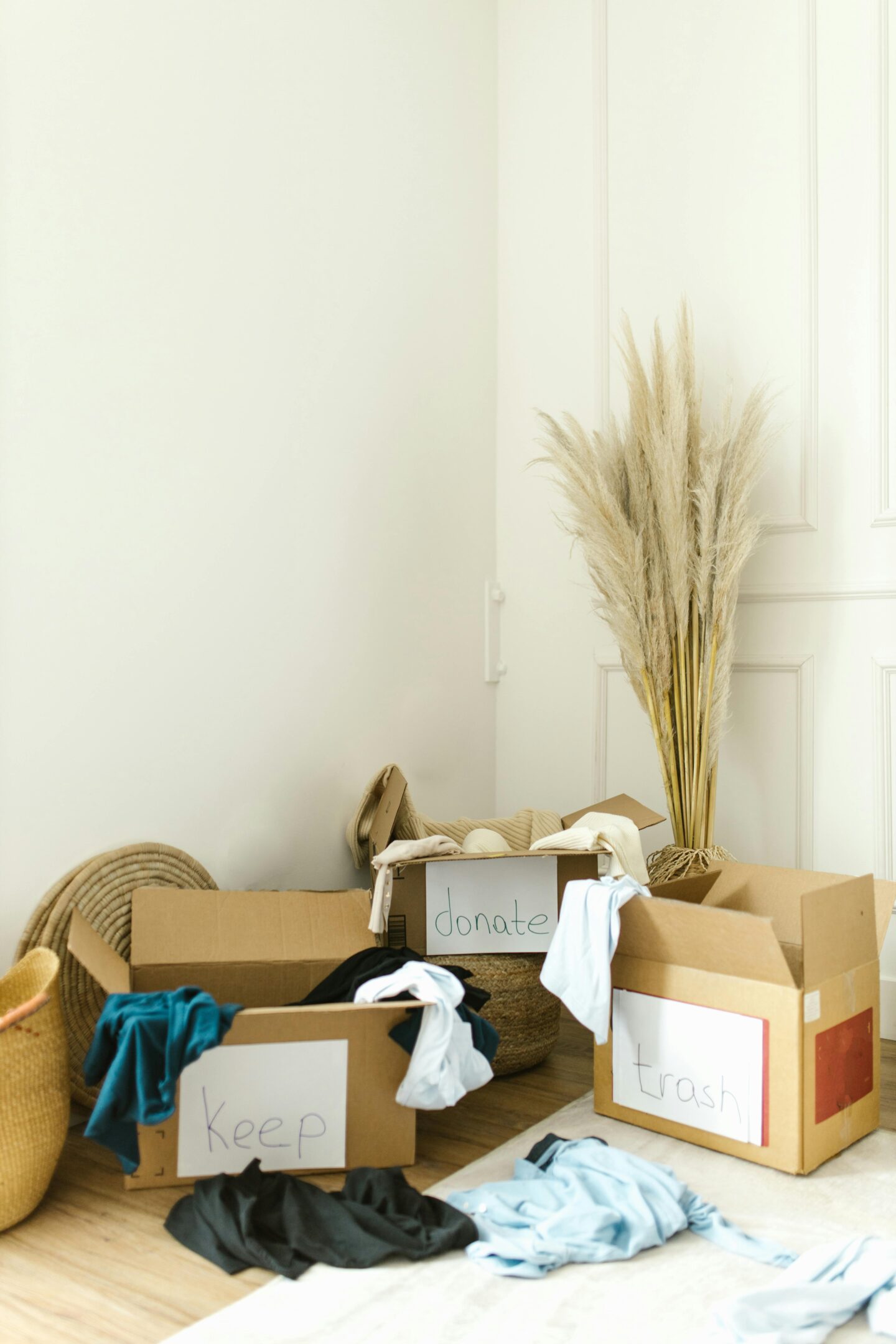
For every room you tackle, bring four clearly labeled boxes or bags: Keep, Donate, Sell, and Trash. The physical act of placing an item in a box is far more decisive than making a mental note. It also makes it harder to quietly slide things back into the “keep” pile out of habit.
The rule: if you haven’t used something in 12 months and it holds no genuine sentimental value, it doesn’t get to move with you. Be especially ruthless with duplicates, broken items you’ve been “meaning to fix,” and anything you kept purely out of guilt.
Sell Before You Pack, Not After
Most people plan to sell unwanted items after the move, when life has “settled down.” That day rarely comes. Sell before you move – use Facebook Marketplace, OfferUp, or a neighborhood garage sale to convert clutter into cash that helps offset your moving costs. Give yourself a hard deadline: anything not sold by one week before moving day goes straight to donation.
Declutter With Your New Space in Mind
One of the most clarifying questions you can ask during this process is: where will this actually go in the new place? If you can’t picture a logical home for it in your new space, that’s a strong sign it shouldn’t make the trip. Pull up your new floor plan if you have one. Think about storage, room size, and how the new layout differs from your current home.
The Climate Factor: What Your New State’s Weather Means For Your Stuff
Where you’re moving to should directly shape what you decide to keep. This is something most decluttering guides ignore entirely, and it’s a mistake.
If you’re relocating from a warmer region to a colder state – think the Midwest, the Northeast, or the Pacific Northwest – suddenly your winter gear, heavy blankets, insulated boots, and layering pieces become genuinely useful again. Things you may have barely touched for years have a real function in your new climate. Before you donate that heavy coat or those thermal curtains, check where you’re headed first.
The reverse, however, is where most people get caught off guard. If you’re moving to Arizona – and Phoenix in particular – the calculus flips entirely. Heavy textiles, thick rugs, and layered bedding you relied on in a colder climate will go largely unused in a place where winters are mild and summers are relentless. More critically, Phoenix garages routinely hit 150°F in July, which means anything heat-sensitive you plan to store – vinyl records, candles, wooden instruments, electronics, wine, photographs, or aerosol cans – can be ruined within weeks. The garage simply isn’t the overflow storage option it is in cooler states. Factor that into every “maybe I’ll keep it just in case” decision you make.
Beyond what survives the climate, there’s a direct financial case for going leaner when moving to the Phoenix area. Many HOA-governed communities across the Valley have strict scheduling windows for move-in trucks, gate reservation requirements, and time-on-premises limits – meaning your moving clock is tighter than you might expect. A smaller, well-edited load moves faster, and faster means cheaper. Working with affordable movers in Phoenix, Arizona helps, but nothing cuts your bill more reliably than simply bringing less.
Give Sentimental Items Their Own Session
Sentimental clutter is the hardest and deserves its own dedicated time – not squeezed in at the end of a long declutter session when your decision-making is exhausted. Set aside a separate evening specifically for photos, letters, inherited objects, and childhood keepsakes. Give yourself permission to keep what truly matters. Give yourself equal permission to let go of things you’ve been holding out of obligation rather than love.
A useful test: if the item disappeared tomorrow, would you actually grieve it – or would you feel a quiet, guilty relief?
Don’t Pack The Junk Drawer Whole
Every home has a junk drawer, and almost everyone packs it without looking inside. Don’t. Empty it completely, throw out 80% of what’s in it, and only pack what genuinely has a purpose in your new home. The same logic applies to bathroom cabinets (expired medications, half-empty products, duplicate toiletries), kitchen pantries (expired food, gadgets used once), and coat closets.
The Goal Is Arrival, Not Accumulation
The move itself is the easy part – trucks show up, boxes get loaded, and within a day you’re somewhere new. What you bring with you, though, shapes how quickly that new place feels like home. Arriving with less means unpacking faster, settling in more deliberately, and starting fresh rather than just relocating the same clutter to a new address.
Declutter like you mean it. Your future self – standing in a calm, organized new home – will be genuinely grateful.
Thanks for stopping by!
Magda
xoxo
<3