Most people picture a monsoon trip as weeks of grey downpour, so they pack a heavy raincoat and rubber boots. Cambodia from June to September rarely looks like that. Rain usually comes in hard bursts and then moves on, while the heat never leaves and the fields and forests turn a deep green that dry-season visitors never get to see.
So the packing problem is drying out, more than staying dry. That one shift changes almost everything in the bag.
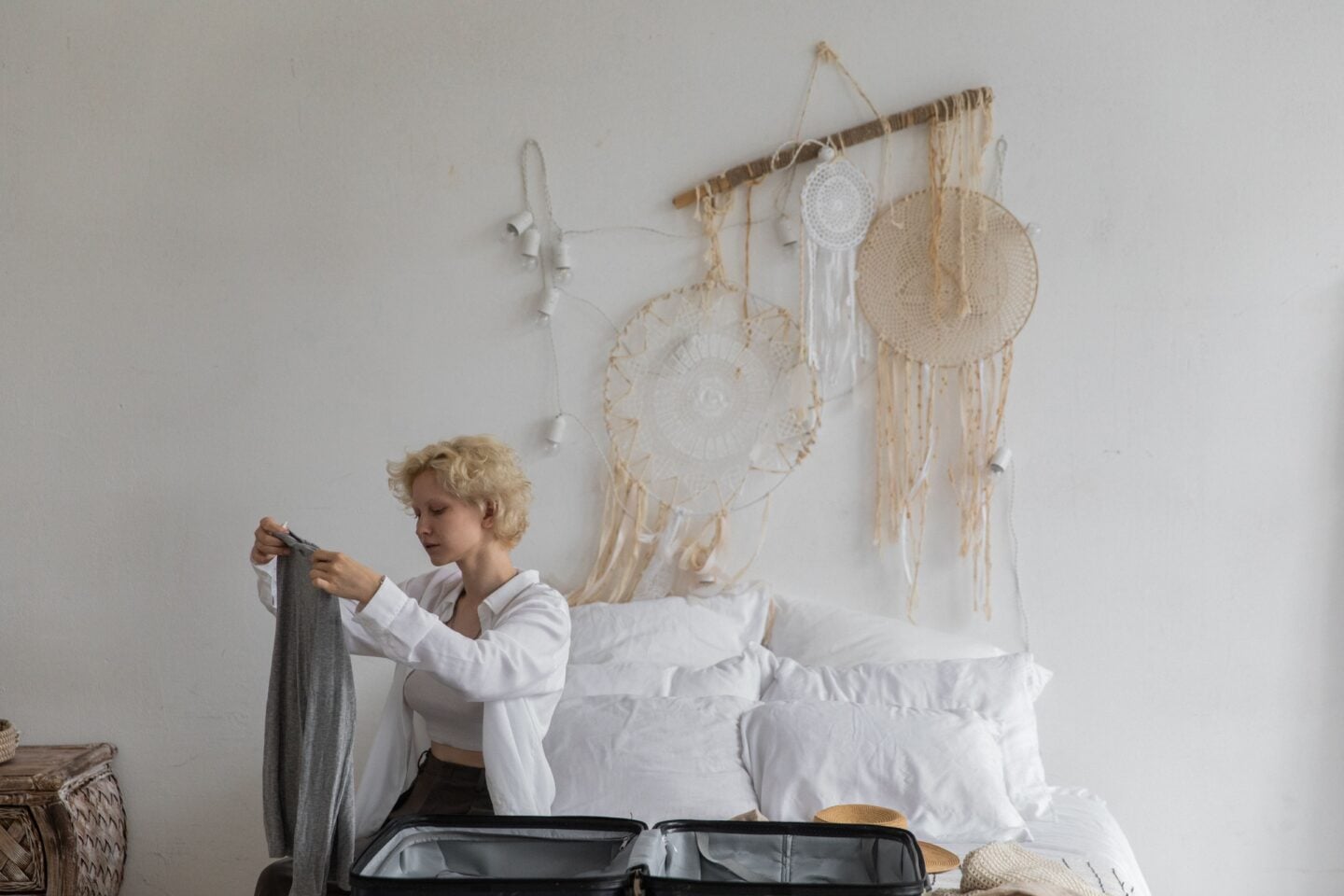
Image credit: Pexels
What Does Green Season Mean For Your Suitcase?
It means packing for humidity first and rain second. Cotton is the main thing to cut. A cotton T-shirt soaked by sweat at 10am will still be damp at dinner, and a pair of jeans may never dry at all. Synthetic or merino tops and quick-dry underwear can be rinsed in a sink at night and worn again in the morning.
Bring fewer clothes than you think and plan to wash them. Pack a handful of zip bags and one or two roll-top dry bags. They keep a phone and a passport dry through a cloudburst or a wet boat seat, and they separate damp clothes from clean ones on travel days.
Which Bag And Layers Suit Wet-Season Days?
A soft backpack or duffel with a rain cover is the right call. Hard-shell rollers struggle on muddy lanes and the steps up to river boats. You’ll carry the bag more than you’ll wheel it.
Layering barely applies here. The useful extras are a thin long-sleeved shirt for sun and mosquitoes, plus something light for air-conditioned buses, which can be properly cold.
On rain gear, a cheap poncho beats a technical jacket. Jackets trap heat and turn into personal saunas within minutes. A poncho goes over both you and your daypack and dries in the time it takes to order a coffee. A compact umbrella is worth carrying too, since it doubles as shade.
What Shoes Work On Slick Temple Stones?
Sport sandals with deep rubber treads, plus one pair of light trail shoes, cover nearly everything. Sandstone steps at the Angkor temples grow a thin film of moss in the wet months, and smooth soles slide on it badly. Flip-flops are fine for the guesthouse and not much else.
Sandals make the most sense for town days and short temple circuits, and anywhere you might wade through a flooded street. They dry fast and don’t hold water. Save the trail shoes for root-tangled paths and longer rural walks, when closed toes matter.
Leave leather at home. It stains and starts to smell within a week of humid air. Bring extra socks in synthetic or wool, more pairs than seems reasonable, because damp socks cause blisters fast.
What Should You Wear To Ta Prohm’s Early Start?
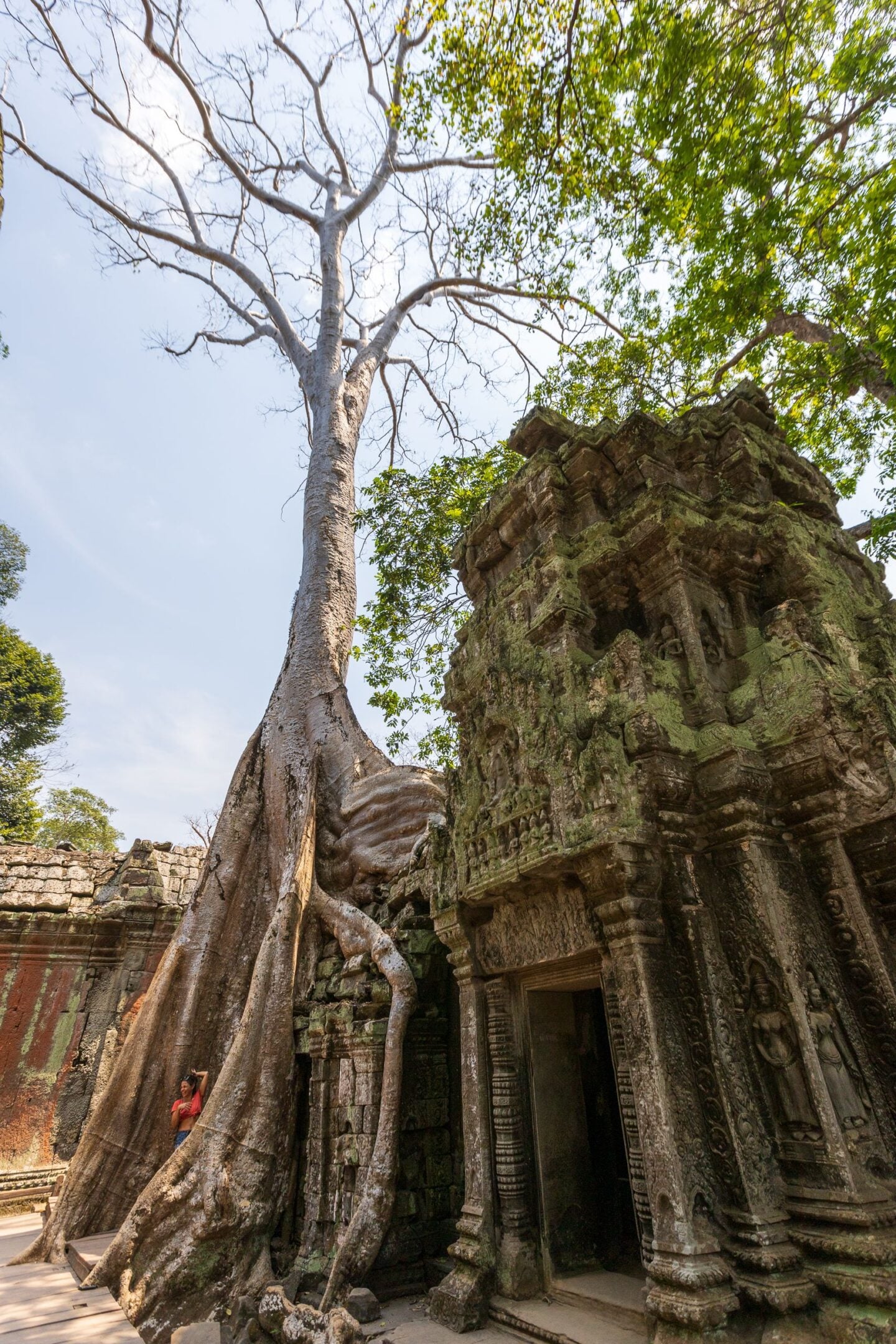
Image credit: Pexels
Dress in loose, lightweight trousers or a long skirt, keep your shoulders covered, and choose sandals or trail shoes with real grip. At Ta Prohm, fig roots wrap around doorways and galleries and lift the old stonework. It became famous as a Tomb Raider filming location, and it pulls crowds to match. Getting there early is the standard advice, and it’s good advice.
An early start in green season has its own needs. The air is heavy and still, and the ground and stones are often wet from overnight rain. Mosquitoes are busy in the shade under the canopy, so put on repellent before you leave the hotel, not at the gate. A small cloth for your camera lens or phone helps too, because cold glass fogs over the moment it meets that humid air.
Bring a refillable bottle. By the time the tour groups arrive, you’ll have drunk most of it.
What Do You Need For Rural Walks Where Land Mines Are A Hazard?
You need a guide first and gear second. Outside the main towns few people speak English, and land mines remain a danger in some rural areas. Guided tours are the sensible way for solo travellers to see rural Cambodia. A good local guide knows which routes are safe and can translate when you meet villagers.
Pack for the day around that. Closed trail shoes and long trousers protect against thorny scrub and ants. Bring a small daypack with water, oral rehydration sachets, snacks and a headlamp in case a late downpour slows you down.
Ask your hotel to write your destination and the hotel’s address in Khmer on a card. Download offline maps before you go. Carry small riel notes, since village stalls and roadside shops won’t have change for large bills.
Above all, walk only where the guide walks. Don’t step off a path for a photo or a shortcut through a field.
What Belongs In A Beach Kit For Sihanoukville?
Sihanoukville is the south’s beach city, and its kit is mostly about sun on cloudy days. Overcast skies still burn, so pack a high-factor, reef-friendly sunscreen and a long-sleeved rash guard, which saves you from reapplying every half hour in the water.
Bring two swimsuits, since one will always be damp. A sarong works as a towel, a cover-up, a picnic blanket and a light layer on the bus. Wet-season seas can turn choppy, so ask locally before swimming and keep your dry bag handy for boat trips to the islands.
Plenty of travellers fit the coast in after Siem Reap and Phnom Penh. Itineraries built through luxury Cambodia tours link the temples and the southern shore with transfers already planned, which means the beach kit can sit packed at the top of the bag, ready for the first afternoon by the sea.
Which Documents And Small Essentials Should You Pack For A 30-day Visa?
Pack your passport and two spare passport photos, along with printed copies of your visa and travel insurance. The tourist visa allows one stay of up to 30 days, with a single extension available in Phnom Penh or through local agencies, and the spare photos and copies make that paperwork easier if your plans change. Keep the passport itself in a zip bag inside your daypack, never loose in a pocket during the rainy months.
The small things also matter more in the wet season. A power bank keeps maps and translation apps running through a long day. Rehydration salts, antiseptic cream, blister plasters and any personal medication belong in a waterproof pouch. Pack a travel clothesline and some laundry soap so the quick-dry wardrobe can do its job.
- Quick-dry tops and underwear (no cotton, no jeans)
- Soft backpack or duffel with rain cover
- Roll-top dry bags and zip bags
- Poncho and compact umbrella
- Grippy sport sandals and light trail shoes
- Extra synthetic or wool socks
- Shoulder-covering tops and long trousers for temples
- Insect repellent and lens cloth
- Refillable water bottle and rehydration sachets
- Headlamp and power bank
- Khmer address card and offline maps
- Small riel notes
- Reef-friendly sunscreen, rash guard, two swimsuits, sarong
- Passport in a zip bag with spare photos and printed copies
- Basic first-aid pouch and travel clothesline
Thanks for stopping by!
Magda
xoxo
<3