There’s little that can change a room as effortlessly as an area rug.
Area rugs provide a sense of grounding for your furniture, soften hard surfaces, and can tie a room together. Whether you’re creating a quiet sanctuary or refreshing a room with rough and tumble chaos, the right area rug adds warmth and an extra layer of purpose to your space without overpowering your space.
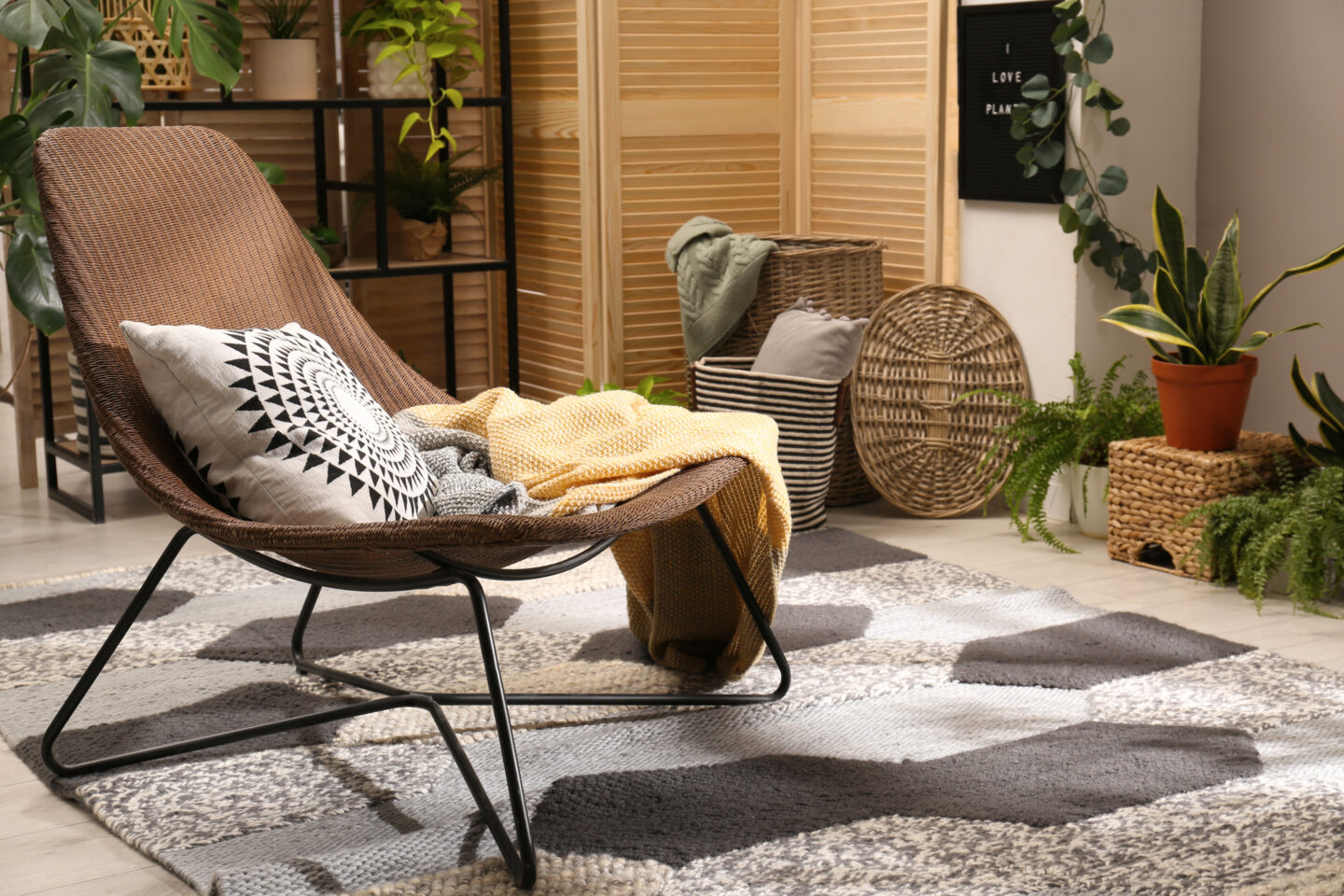
Why Area Rugs Are Essential In Interior Design
Area rugs really do a lot more than simply cover a floor. They can help to outline the way a room functions, the atmosphere it evokes, and even affect the way you feel when you’re in the room. Rugs naturally separate the different areas of open-plan homes and apartments, so there’s no need for walls separating your living area from the dining or lounging spots. Rugs add structure and balance to small spaces, whether they’re being used to make a room feel more purposefully styled, keep things from looking too cluttered, or both!
But beyond these aesthetic and design-based reasons for rug purchasing, rugs can also provide comfort. Hard flooring can make a room feel awfully cold and sterile, and the right rug can make a room feel more cozy, comfortable, and inviting. Rugs absorb sound, and so can stop an echo from creeping through a modern space, and make a room feel calmer and more intimate due to this.
Choosing The Right Area Rug For Your Space
Rugs are the key to elevating any room in your home. Buying an area rug is a great way to freshen up a space or update the design of a room. The style of the room will largely determine the pattern and texture of the rug. When you buy an area rug, make sure to set it in the context of the room, so that the rug fits in seamlessly.
Choosing a bedroom rug, for example, might call for something soft and plush, adding a lush feeling to your room that you can appreciate coming out of bed in the morning. As opposed to a living room rug that acts as a design accent, a bedroom rug usually offers a daily dose of comfort.
Getting The Size Right Makes All The Difference
Your rug’s size is one of the most crucial decisions you will make for any room. And, except in a few rare circumstances, the size you choose can make or break your space.One of the most common regrets we hear about area rugs is that the rug is too small for the room. The other? That the rug is the wrong shape. A rug that is too small for the room can cause your space to look and feel unfinished and unbalanced. Conversely, if you have a properly scaled rug, it will appear as though it suits your furniture and room, providing a visual foundation by covering the main area of a room or defining living areas.
In large rooms, a big enough rug will help connect all of the pieces together. In small rooms, the right scale will prevent everything from feeling cramped. As a rule, when in doubt, go a little bigger with the rug. An “almost but not quite” size always looks more pulled together.
Materials That Match Your Lifestyle
For a rug to stand the test of time, consider the material. Soft-as-butter natural wool withstands traffic and improves with every passing year. Use it throughout the main living areas, hallways, and staircases. The ideal combination for those who want a living room rug that feels good under their feet and can take what you dish out.
Rather use a lighter, airier rug texture and material? Go with the throwback styles and pick cotton. It’s a match made in decorating heaven. Cafe au lait coloring gives a crisp edge to casual cushions and rattan furniture. Feeling something a just as comfy, but a bit more distinctive? Shake it up with a little jute; the fiber gives a subtle nubby sheen.
The ultimate throw down, performance-wise, in living room rugs? Select synthetic-fibered rugs, the best bet for anyone with a family that loves to eat, drink, and really make the living room their own. All are ultimately comfortable living room rug options, so enjoy choosing!
How Pile Height Affects Look And Feel
The pile height is how high or thick the fibers of your area rug yarn are, and it makes a big difference for how comfortable and how well the rug wears. Low-pile rugs entangle will be the most streamlined and worry-free, so these rugs are great choices for rough family rooms and dining areas, or high-traffic and/or high-function rooms.
Medium pile rugs are a good in-between: they have a little more give and comfort, but won’t interfere with how the room and its features work. And ultra-plush, super-high-pile area rugs can feel pampering, and bring both sumptuous texture and a look of luxury to relaxed rooms like bedrooms or comfortable reading spaces. Obviously, each type gives a different look and feel, so you may want to decide depending on how you plan to use the room.
Using Area Rugs To Shape Your Interior Style
Rugs are a fantastic tool for adding color, texture, and personality to a room. All can be quiet with a neutral rug, a respite for the eye that gives the furniture and artwork a chance to take the spotlight. A rug with a pattern in high or low contrast to the rest of the room gives the eye something to hold onto and adds personality without needing additional flair.
Texture is another important component. A flat-woven rug is sleek and modern. A higher pile, either ultra-soft or chunky, adds depth, warmth. I also like rugs layered or in combos when an interior is a bit more relaxed or avant-garde.
Most designers work from things that they’ve seen. Rugs that are part of the exhibit from brands such as Serena & Lily often resonate because they have a fresh, long-lasting vibe; graphic patterns but nothing too gimmicky for a wide variety of spaces.
Placement Tips That Create A Cohesive Look
Finding the right spot for a rug can be as important as the rug itself. One basic rule in living rooms: The area rug, whether it’s a true “area” rug, running the length and width of the seating area, or simply a mat beneath a coffee table, cannot be an island. It must be tied to at least all the other furniture with its periphery visible. Ditto for beds (they should be “set” completely on the rug), and it’s better in bedrooms if the rug, or at least one pair of edges, extends out into the walking area to again form that foundation for space planning and visual flow.
Transitional spaces can always use a little help; runners ensure them in long halls, in front of beds that appear to be floating, and beneath tables in odd corners of a room. As for dining, the table should stay comfortably atop the rug even when you pull out the chairs. Use your judgment: a rug in a place that doesn’t look purposeful isn’t a good choice, and neither is one that is just too big or too small for the site.
A Finishing Touch That Ties Everything Together
Area rugs are special in that they have the ability to pull a room together with the addition of warmth, structure, and personality. When selected with care, they become a layer of support that can be felt throughout everything else in a well-designed space.
No matter the size of the room, if you’re in the market for an area rug, it has the power to inform the tone and usability of your space. For those seeking a collection that offers timeless options with an easy blend of casual and tailored aesthetics, Serena & Lily-inspired collections continue to impact the way we design these days in the realm of comfort and style.
Thanks for stopping by!
Magda
xoxo
<3