Vaults are designed to protect high-value assets from theft, damage, tampering and unauthorised access. While they are often associated with banks, modern vaults also support museums, data centres, jewellery businesses, logistics firms and specialist storage facilities.
Behind every secure vault is a layered approach that combines reinforced architecture, access control, surveillance, monitoring and carefully managed storage systems. The aim is not to rely on one barrier, but to create multiple points of protection that work together.
Here is how modern vault security works behind the scenes.
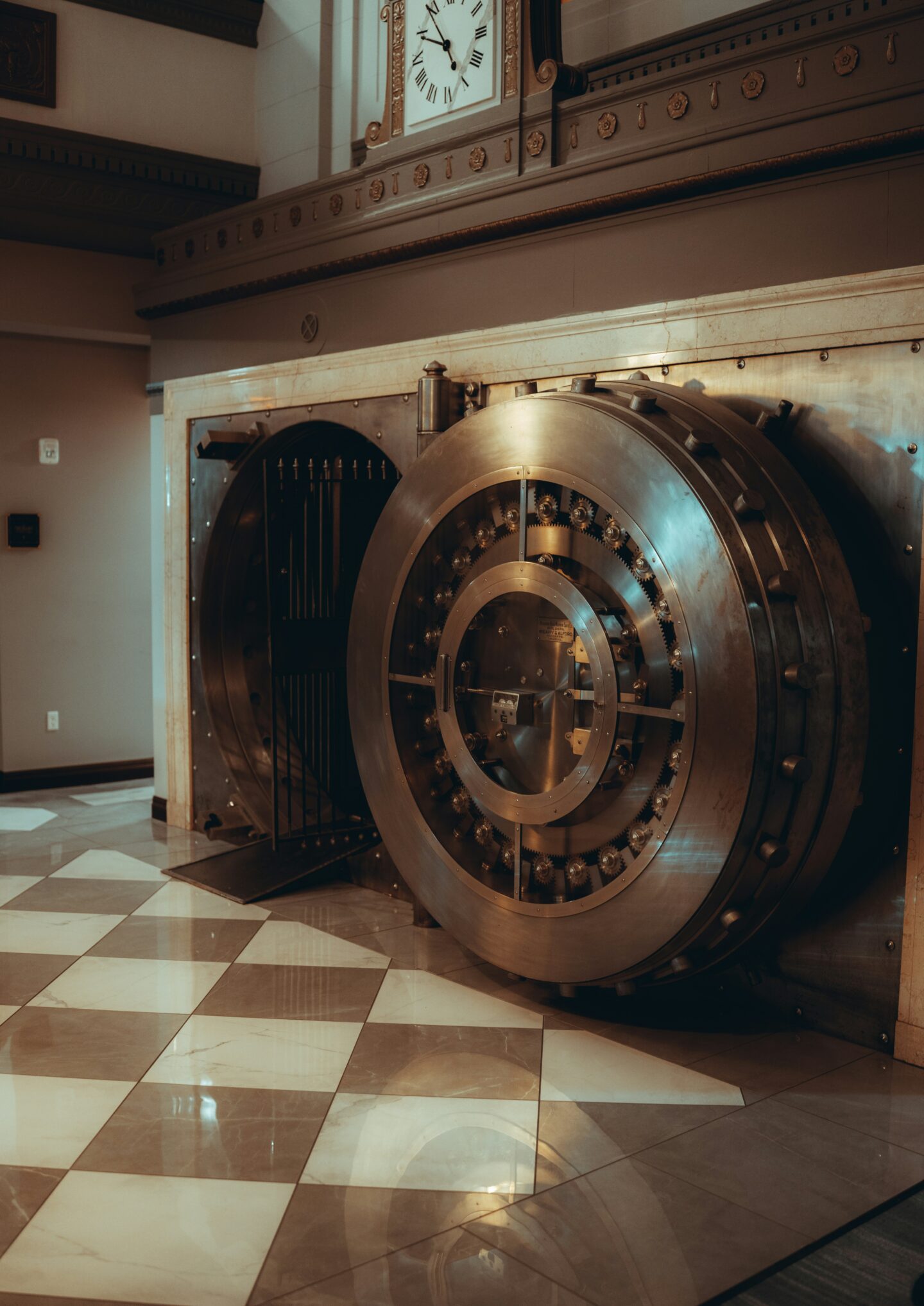
Source: Unsplash
1. Reinforced Architecture Forms The First Line Of Defence
A vault’s physical structure is its most visible security feature. Walls, floors, ceilings and doors are built to resist forced entry, drilling, cutting and impact, often using reinforced concrete, steel composites and specialist locking mechanisms.
The layout also matters. Secure facilities may use controlled corridors, limited access points, anti-tailgating entrances and protected loading areas so that valuable items can be moved without exposing the wider vault environment.
This type of construction helps protect a wide range of stored assets, from confidential records and rare artefacts to jewellery, cash and gold bars. In this context, gold is simply one example of the kinds of compact, high-value items that require tightly controlled storage.
Good vault architecture delays intrusion, limits movement and gives monitoring teams more time to respond to any attempted breach.
2. Access Controls Decide Who Can Enter And When
Modern vaults usually rely on layered access controls rather than a single key or code. Staff may need identification cards, PINs, biometric checks, time-limited permissions or dual authorisation before they can enter restricted areas.
These systems also create a record of who accessed the vault, when they entered and which areas they were permitted to use. That audit trail is essential for accountability, internal investigations and routine compliance checks.
Access is often separated by role. A technician might be allowed into a maintenance zone without having access to storage compartments, while a supervisor may need to approve entry before certain doors or deposit systems can be opened.
By controlling permissions in this way, a vault can reduce internal risk as well as external threats.
3. Surveillance And Storage Technology Add Constant Oversight
Surveillance is another core part of vault security. Cameras, motion sensors, vibration detectors and alarm systems can be used to monitor activity around entrances, corridors, storage rooms and deposit points.
Storage technology has also become more sophisticated. Some facilities use numbered compartments, automated retrieval systems, tamper-evident containers and environmental controls to manage valuable or sensitive items safely.
The history of vault design shows the same pattern: as threats become more advanced, security evolves in response. Heavy mechanical locks gave way to time locks, electronic systems, biometric access and integrated monitoring platforms.
This integration is important because vaults are rarely static spaces. Items may be deposited, collected, inspected, catalogued or transferred under strict procedures. A well-designed system helps staff complete those tasks while reducing the chance of misplaced items, unauthorised handling or gaps in the security record.
Environmental controls can be just as important as locks and alarms. Some stored items may need stable temperature, humidity or lighting conditions to prevent deterioration, particularly in museum, archive or specialist storage settings. In these cases, vault security is not only about preventing theft; it is also about preserving the condition and integrity of what is stored inside.
The historical development of vaults shows how security has always adapted to changing risks. Early strongrooms relied heavily on thick walls, heavy doors and mechanical locks. Over time, designs became more complex, introducing time-delay mechanisms, stronger alloys, alarm connections and eventually digital systems that could be monitored in real time.
Today, many vaults combine traditional engineering with modern data-led oversight. Security teams can use logs, alerts and monitoring dashboards to understand patterns of access and spot irregular behaviour. This helps turn the vault from a passive storage room into an actively managed security environment.
Final Thoughts
The most secure vaults are not defined by one impressive door or one advanced scanner. They are built around layers of protection that support each other, from the materials used in construction to the way staff credentials are issued, reviewed and revoked.
This layered approach is what makes vault security so specialised. A physical barrier can slow down an attempted intrusion, while surveillance systems can detect unusual activity, access controls can restrict movement and audit trails can show exactly what happened after an incident. Each element has a different purpose, but together they create a controlled environment where valuable items can be stored with far less exposure to risk.
As security threats continue to change, vault design will keep evolving too. Modern facilities must balance strength, technology, discretion and operational efficiency, ensuring that assets remain protected without making day-to-day access unnecessarily difficult for authorised users.
Thanks for stopping by!
Magda
xoxo
<3