Some people really did hack the system with this lifestyle, and no, that’s not biased at all. A digital nomad is someone who works online and still gets to country hop, chase sunsets, and answer emails from cafés instead of cubicles. If that sounds like you, you already know the hardest part is not the work, it’s choosing where on earth to open your laptop next.
If you’re short on inspiration for your next few months or even the next year, this guide rounds up some of the best cities for digital nomads across Latin America. You will find big, buzzing capitals and smaller, chilled-out spots that are perfect places for digital nomads who want a mix of decent Wi‑Fi, community, and adventure. These are some of the top cities for digital nomads where you can actually live, not just pass through.
Most of the picks come from a mix of real on-the-ground experience and what other remote workers rave about when they talk about digital nomad South America and the wider digital nomad Latin America scene. None of these cities are perfect, and every place has trade offs, whether it is safety, cost, or weather. The fun part is figuring out which “imperfect” city might secretly be perfect for you.
Big Cities To Live As A Digital Nomad In Latin America
Mexico City, Mexico

Mexico City is a huge, buzzing capital where leafy neighborhoods, world‑class food, and over 150 museums sit on top of a very modern, nomad‑friendly infrastructure. It is one of the best cities for digital nomads in Latin America if you want big‑city energy, endless things to do, and great value compared with US or European capitals.
Best area to live in Mexico City
Most digital nomads stay in Roma Norte, Condesa, Juárez, Polanco, or Coyoacán, which are safer, walkable, full of cafes, and well connected by metro and rideshares.
Pros & Cons
Pros
- Excellent internet, tons of coworking spaces and laptop‑friendly cafes, plus a big international community.
- Great value for money for a major city, with amazing food, culture, and easy flights across the Digital Nomad Latin America circuit.
Cons
- Traffic, noise, and air pollution can be intense, especially around main avenues.
- You need to stay street‑smart about petty crime and pick neighborhoods carefully, like most top cities for digital nomads in the region.
Cost of living in Mexico City (monthly estimate)
A typical digital nomad budget lands around 1,300–1,800 USD per month in Roma or Condesa, including a one‑bedroom or studio, food, transport, and a coworking membership.
Internet reliability
CDMX has some of the best connectivity in the country, with many apartments and coworking spaces offering 50–100 Mbps fiber and solid mobile data as backup.
Community & coworking spaces
There are dozens of coworking spaces across Roma, Condesa, Juárez, and Polanco, plus active meetup, WhatsApp, and Facebook groups that make it easy to plug into the digital nomad South America and Mexico scene.
Lifestyle & leisure
Outside work you have museum days, mezcal bars, street food tours, leafy parks, and easy weekend trips to places like Teotihuacán, Puebla, or Valle de Bravo.
Tips for getting started
Start with a month in Roma or Condesa, grab a Telcel or AT&T SIM at the airport, and double‑check Mexico’s tourist‑stay rules if you plan to use Mexico City as a long‑term base among your best cities for digital nomads.
Medellin, Colombia

Medellín is one of the best cities for digital nomads in South America thanks to its springlike weather, mountain views, and big remote‑worker scene. The city mixes Colombian culture with modern infrastructure, making it a favorite base in the Digital Nomad Latin America circuit.
Best area to live in Medellín
El Poblado and Laureles are the top choices, offering safe, walkable streets, lots of cafes, and quick access to coworking spaces.
Pros & Cons
Pros
- Medellín has a relatively low cost of living, great weather year‑round, and strong metro and rideshare options.
- Fast internet and a big international community make it one of the top cities for digital nomads who want comfort and social life.
Cons
- Safety has improved but you still need to stay cautious about petty crime and scams, especially at night.
- Spanish is useful, and some newcomers find local bureaucracy and banking slow compared with other places for digital nomads.
Cost of living in Medellín (monthly estimate)
Most digital nomads live comfortably on roughly 1,000–1,800 USD per month, depending on area and lifestyle.
Internet reliability
Home and coworking connections typically range from about 30 to over 100 Mbps, more than enough for calls and heavy online work.
Community & coworking spaces
Medellín has plenty of coworking options in El Poblado and Laureles plus active Facebook and WhatsApp groups for digital nomads and expats.
Lifestyle & leisure
Outside work, you get cafe culture, nightlife in El Poblado and La 70, and easy weekend trips to Guatapé and nearby pueblos.
Tips for getting started
Start with a short‑term rental in El Poblado or Laureles, and check Colombia’s digital nomad visa if you plan to stay longer than a standard tourist stamp.
Cartagena, Colombia
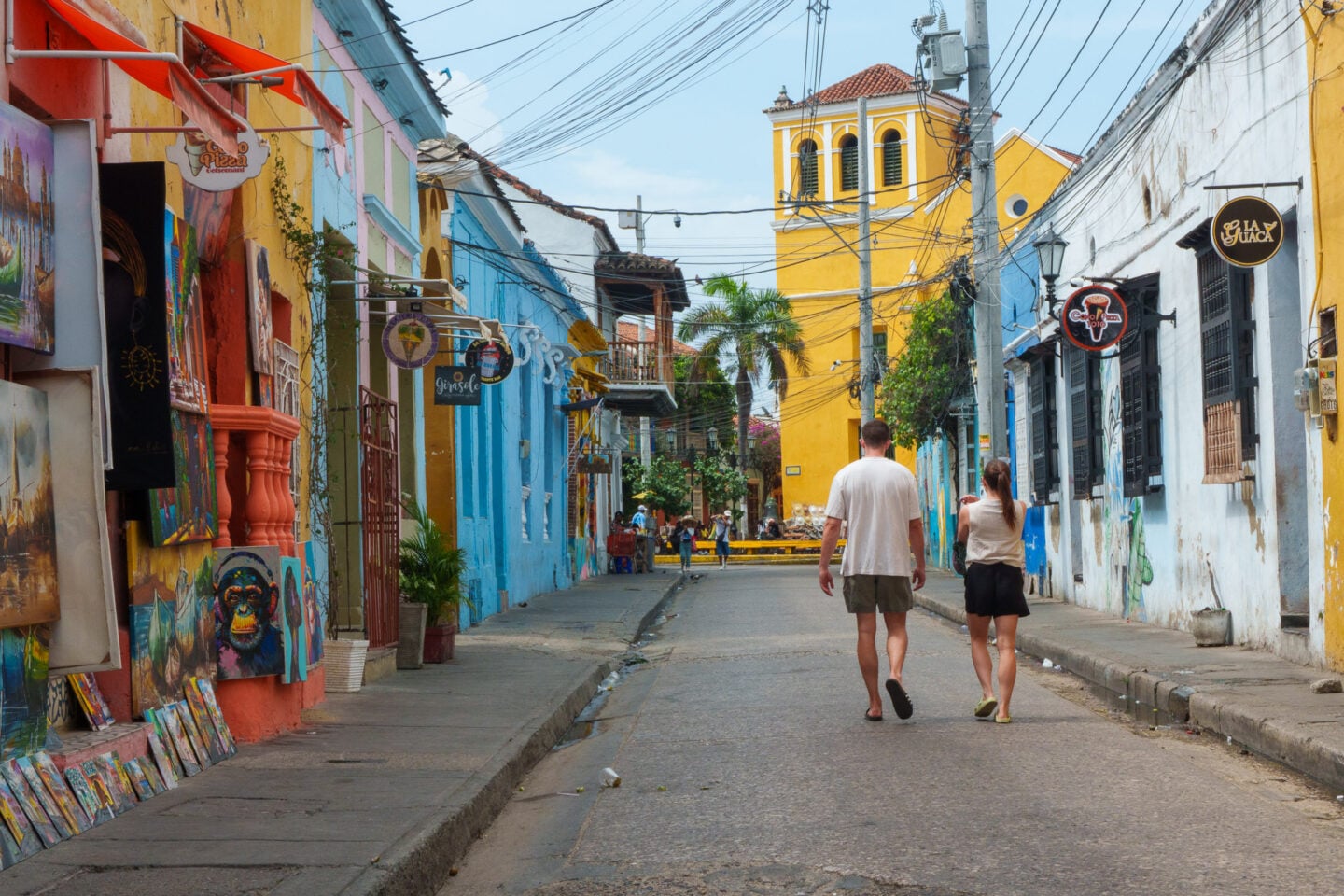
Cartagena is a colorful Caribbean port city with a stunning walled Old Town, lively plazas, and beaches, which makes it one of the most unique places for digital nomads in Colombia. It is more laid back than big capitals but still offers enough infrastructure to stay on the Digital Nomad Latin America route for a few weeks or months.
Best area to live in Cartagena
Most digital nomads choose the Centro Histórico, Getsemaní, or Bocagrande, which balance safety, walkability, and access to cafes, coworking spaces, and the beach.
Pros & Cons
Pros
- Beautiful colonial streets, Caribbean beaches, and warm weather year‑round.
- Growing nomad scene, decent infrastructure, and plenty of cafes to work from in the historic center and Bocagrande.
Cons
- Hot and humid climate, plus higher prices than many other Colombian or South American top cities for digital nomads.
- Tourist crowds, noise in Old Town and Getsemaní, and the usual need for caution around petty crime.
Cost of living in Cartagena (monthly estimate)
A single digital nomad can expect to spend roughly 1,100–1,900 USD per month, depending on neighborhood, season, and how often you eat and party in touristy areas.
Internet reliability
Internet is generally stable in central neighborhoods and coworking spaces, with mobile data working well as a backup for calls and remote work.
Community & coworking spaces
Cartagena has a smaller community than Medellín or Mexico City but offers a few solid coworking spaces and regular events that help digital nomad South America travelers connect.
Lifestyle & leisure
Outside work, nomads can explore the walled city, street art in Getsemaní, island‑hopping to Rosario Islands, and an active nightlife and food scene.
Tips for getting started
Book a short stay in Centro or Getsemaní first, then look for monthly deals in Bocagrande or nearby residential areas, and check Colombia’s digital nomad visa if you plan to stay longer‑term. You can learn more about Cartagena in this post.
Lima, Peru

Lima is a coastal mega city perched on cliffs above the Pacific, known for its food scene, surf, and mix of colonial and modern neighborhoods. It is one of the best cities for digital nomads in Peru thanks to fast internet, solid infrastructure, and a growing remote‑worker and startup community in Miraflores and Barranco.
Best area to live in Lima
Digital nomads usually base themselves in Miraflores, Barranco, or San Isidro, which are safer, walkable, and packed with cafes, gyms, and coworking spaces close to the ocean.
Pros & Cons
Pros
- Reliable high‑speed internet, plenty of coworking spaces, and lots of laptop‑friendly cafes.
- Amazing food, coastal views, and easy connections to the rest of Peru, which keeps Lima high on Digital Nomad Latin America shortlists.
Cons
- Grey, overcast weather for much of the year and traffic that can be intense in peak hours.
- Big city safety considerations and language barriers if you do not speak Spanish, as English is only moderately spoken outside tourist zones.
Cost of living in Lima (monthly estimate)
Most digital nomads live comfortably on roughly 1,000–1,800 USD per month, with Miraflores and Barranco at the higher end of that range.
Internet reliability
Lima has some of the fastest and most stable internet in Peru, especially in Miraflores, Barranco, and San Isidro, with fiber widely available and mobile data as a good backup.
Community & coworking spaces
You will find an active expat and nomad community, multiple coworking brands, and even hostels with built‑in cowork spaces, which makes it easy to plug into Digital Nomad South America networks.
Lifestyle & leisure
Outside work, you can surf, run or cycle along the Malecón, explore historic plazas, and dive into world‑class ceviche, bars, and nightlife in Barranco and Miraflores.
Tips for getting started
Book a short stay in Miraflores or Barranco first, and check current Peruvian entry rules and any evolving remote‑worker or long‑stay options before planning a multi‑month base.
Rio de Janeiro, Brazil

Rio de Janeiro is a dramatic mix of mountains, jungle, and iconic beaches, which makes it one of the best cities for digital nomads who want big city energy and outdoor living in the same place. It has been climbing the rankings of top cities for digital nomads thanks to better infrastructure, citywide 5G, and a very social lifestyle that is easy to plug into.
Best area to live in Rio de Janeiro
Most digital nomads base themselves in Ipanema, Leblon, Copacabana, or Botafogo, which combine beach access, safer streets, good cafes, and easy metro connections.
Pros & Cons
Pros
- Spectacular setting with beaches, hikes, and a warm climate that lets you live outside most of the year.
- Improving internet, plenty of coworking spaces and cafes, and a strong digital nomad and expat community supported by Brazil’s nomad‑friendly visa.
Cons
- Safety can be an issue in some areas, so you need to stay street‑smart and choose neighborhoods carefully.
- High season prices, traffic, and summer heat can all be tiring if you prefer quiet, cooler Digital Nomad South America bases.
Cost of living in Rio de Janeiro (monthly estimate)
A single nomad typically spends about 1,200–2,000 USD per month, with Ipanema and Leblon at the high end and Botafogo or Flamengo helping keep costs lower.
Internet reliability
Rio now has fast fiber in most central areas plus strong 4G and expanding 5G, so working from home, cafes, or coworking spaces is usually smooth.
Community & coworking spaces
There is a large, active international crowd, multiple coworking spaces across the South Zone, and lots of meetups, language exchanges, and hobby groups that make Rio a social hub in the Digital Nomad Latin America scene.
Lifestyle & leisure
Outside work, you can bounce between beach workouts, samba nights, football matches, forest hikes, and a big food and bar scene, especially in Zona Sul.
Tips for getting started
Start with a short rental in Ipanema, Copacabana, or Botafogo, join the expat facebook group and look into Brazil’s digital nomad visa if you want to turn Rio into a medium‑ or long‑term base.
Curitiba, Brazil

Curitiba is a green, well‑planned city in southern Brazil, known for its parks, efficient public transport, and safer feel than many big Brazilian hubs. It is increasingly promoted as one of the best cities for digital nomads who care about quality of life, cooler weather, and reliable infrastructure in Latin America.
Best area to live in Curitiba
Batel and Centro are popular with digital nomads thanks to their central location, safer streets, cafes, and access to coworking spaces, while Água Verde and Bigorrilho offer a quieter, residential vibe.
Pros & Cons
Pros
- Affordable cost of living compared with Rio or São Paulo, plus very good public transport and walkable central areas.
- Fast, reliable internet, plenty of coworking options, and a reputation as one of Brazil’s safest and most organized cities for remote workers.
Cons
- Cooler, sometimes rainy climate that feels less “tropical Brazil” than other Digital Nomad South America hotspots.
- Smaller international community and nightlife scene than bigger coastal cities, which may feel quiet if you want constant social buzz.
Cost of living in Curitiba (monthly estimate)
Most nomads report needing roughly 1,000–1,700 USD per month for a comfortable life in Curitiba, including rent in a good neighborhood and regular eating out.
Internet reliability
Curitiba is known for ultra‑fast, stable internet in most central districts, along with good mobile coverage, so working from home or coworking is rarely a problem.
Community & coworking spaces
The digital nomad community is smaller but growing, with several coworking spaces in Batel and Centro and online groups where you can meet other remote workers and expats.
Lifestyle & leisure
You get a relaxed lifestyle with lots of parks, bike‑friendly areas, cultural events, and weekend trips to the coast or nearby nature, rather than a pure beach‑party scene.
Tips for getting started
Look for short‑term rentals in Batel, Centro, or Água Verde, grab a local SIM on arrival, and use Brazil’s digital nomad visa or standard tourist stays to test Curitiba as a longer base in the Digital Nomad Latin America circuit.
Santa Cruz de la Sierra, Bolivia

Santa Cruz de la Sierra is Bolivia’s largest and most modern city, a hot lowland hub with palm‑lined avenues, malls, and a more “tropical” vibe than the Andean capitals. It attracts budget‑minded digital nomads who want a softer landing in Bolivia while still staying plugged into major South American routes.
Best area to live in Santa Cruz de la Sierra
Equipetrol is the go‑to upscale neighborhood for digital nomads and expats, with safer streets, cafes, malls, and modern apartments, while the central rings around the historic center are popular for shorter, cheaper stays.
Pros & Cons
Pros
- Very low cost of living by Digital Nomad South America standards, with cheap food, transport, and local services.
- Warm climate, growing cafe scene, and easy access to nature and trips to places like Samaipata and Amboró National Park.
Cons
- Internet can be slower and less reliable than in other best cities for digital nomads in Latin America, so you need good backups.
- Smaller nomad community, limited public transport, and some safety and infrastructure issues once you leave the better neighborhoods.
Cost of living in Santa Cruz de la Sierra (monthly estimate)
A single digital nomad can often live comfortably on roughly 700–1,300 USD per month, including a decent apartment in a good area, regular eating out, and local transport.
Internet reliability
Fixed‑line internet exists but speeds and reliability vary, so many nomads combine a home connection with a strong mobile data plan or hotspot for calls and heavier work.
Community & coworking spaces
The digital nomad scene is still small, with only a handful of coworking spaces and meetups, so you will likely rely on expat groups and WhatsApp chats to meet people.
Lifestyle & leisure
Life revolves around plazas, shopping centers, bars, and restaurants, with a relaxed, social culture and easy weekend escapes into nearby jungle and mountain regions.
Tips for getting started
Look for short‑term places in Equipetrol or near the central rings, buy a local SIM with plenty of data as soon as you land, and double‑check Bolivia’s visa rules and onward travel plans if you want to make Santa Cruz a longer Digital Nomad Latin America base.
Cochabamba, Bolivia

Cochabamba sits in a fertile valley in the center of Bolivia and is nicknamed the “City of Eternal Spring” for its mild, pleasant climate. It is a laid‑back, very affordable option on the Digital Nomad South America trail, great if you want a more local feel than typical best cities for digital nomads in Latin America.
Best area to live in Cochabamba
Most foreigners and remote workers choose the northern neighborhoods like Cala Cala, Queru Queru, La Recoleta, and parts of Sarco, which are safer, greener, and close to cafes, malls, and gyms.
Pros & Cons
Pros
- Extremely low cost of living, generous food portions, and a relaxed pace of life that makes it easy to focus on work.
- Pleasant year‑round weather, friendly locals, and a growing set of coworking spaces and laptop‑friendly cafes.
Cons
- Smaller digital nomad community and fewer nightlife options than big South American hubs, so it can feel quiet.
- Infrastructure and healthcare are decent but not at the same level as larger top cities for digital nomads like Lima or Medellín, and English is rarely spoken.
Cost of living in Cochabamba (monthly estimate)
A digital nomad can often live well on around 700–1,300 USD per month, including rent in a good neighborhood, groceries, eating out, and local transport.
Internet reliability
Broadband speeds are generally good enough for calls and remote work in the north of the city, though you will want a solid mobile data plan as a backup.
Community & coworking spaces
There are a couple of dedicated coworking spaces plus some laptop‑friendly cafes, and online expat groups help you connect with the relatively small nomad crowd.
Lifestyle & leisure
Life centers on plazas, markets, and long lunches, with access to nearby hikes, viewpoints, and day trips for anyone who wants nature between work sprints.
Tips for getting started
Look for short‑term rentals in Cala Cala, Queru Queru, or La Recoleta, and check Bolivia’s current entry rules and onward‑ticket requirements before planning Cochabamba as a longer Digital Nomad Latin America base.
Asuncion, Paraguay

Asunción is a low‑key, riverfront capital with leafy streets, historic buildings, and a slower pace than most big Latin American cities. It is quietly positioning itself among the best cities for digital nomads who want low costs, relaxed vibes, and easy residency options rather than a hectic metropolis.
Best area to live in Asunción
Digital nomads usually choose Villa Morra, Recoleta, Carmelitas, or Las Lomas, which are safer, more modern areas with malls, cafes, and many short‑term rentals.
Pros & Cons
Pros
- Very affordable cost of living, mild climate, and a calm lifestyle that makes it easy to focus on work.
- Decent internet, growing coworking options, and residency paths that appeal to long‑term Digital Nomad Latin America planners.
Cons
- Smaller nomad and expat scene, so it can feel quiet or isolated compared with other top cities for digital nomads.
- Limited public transport, some language barrier if you do not speak Spanish, and less “sights” than better‑known South American capitals.
Cost of living in Asunción (monthly estimate)
A single nomad can often live comfortably on about 900–1,600 USD per month, including rent in a good neighborhood, eating out, and basic entertainment.
Internet reliability
Internet speeds are usually sufficient for calls and remote work in the main residential districts, especially if you combine home Wi‑Fi with a solid 4G data plan.
Community & coworking spaces
There are several coworking spaces scattered around Villa Morra and Carmelitas plus a modest but growing digital nomad and expat community you can find through online groups.
Lifestyle & leisure
Expect chilled evenings in plazas, café hopping, shopping centers, and easy day trips to nearby riverside towns, nature spots, and small historic sites.
Tips for getting started
Start with a short stay in Villa Morra or Recoleta, and research Paraguay’s residency and tax rules if you are considering Asunción as a long‑term Digital Nomad South America base.
Buenos Aires, Argentina

Buenos Aires is a huge, charismatic capital that blends European‑style architecture with intense Latin energy, tango culture, and a late‑night lifestyle. It is often ranked among the best cities for digital nomads thanks to its affordability for those earning in foreign currencies, strong cafe culture, and big creative scene.
Best area to live in Buenos Aires
Most digital nomads choose Palermo (Soho, Hollywood, Las Cañitas), Recoleta, or Colegiales, which are safe, walkable, full of cafes and bars, and well connected by public transport.
Pros & Cons
Pros
- Very affordable cost of living, especially if you earn in dollars or euros, with cheap rent, food, and public transport.
- Tons of coworking spaces, laptop‑friendly cafes, cultural events, and an active international community, making it one of the top cities for digital nomads in Latin America.
Cons
- Economic instability, high inflation, and occasional bureaucracy can be frustrating for longer stays.
- Petty crime, language barriers if you do not speak Spanish, and some aging infrastructure mean it is not as “polished” as smaller Digital Nomad South America hubs.
Cost of living in Buenos Aires (monthly estimate)
A digital nomad can usually live comfortably on about 1,000–1,700 USD per month, including a one‑bedroom place in a good neighborhood, groceries, going out, and transport.
Internet reliability
Internet is generally reliable enough for remote work, with decent home connections and plenty of coworking spaces offering stable Wi‑Fi for calls and heavy tasks.
Community & coworking spaces
Buenos Aires has a large, established nomad and expat community, with many coworking spaces in Palermo, Microcentro, and Puerto Madero plus regular meetups and events.
Lifestyle & leisure
Outside work you get late‑night steak dinners, wine bars, markets, tango shows, football matches, and day trips to Tigre or Colonia, so it is easy to keep busy every day of the week.
Tips for getting started
Start with a base in Palermo or Recoleta, get a local SIM, and check Argentina’s digital nomad visa and current entry rules, since that can be a big advantage if you want Buenos Aires as a longer‑term Digital Nomad Latin America base.
Small Cities To Live As A Digital Nomad In Latin America
Santa Marta/Taganga Bay, Colombia

Santa Marta is a laid‑back Caribbean city framed by beaches and the Sierra Nevada mountains, ideal if you want a more outdoorsy base than the usual big Latin American hubs. Taganga Bay next door is a tiny former fishing village turned backpacker spot, popular with divers and travelers chasing cheap, simple living by the sea.
Best area to live in Santa Marta
In Santa Marta, digital nomads usually stay in the historic center, El Rodadero, or the beachfront zones of Pozos Colorados and Bello Horizonte, while Taganga works better for short beach breaks than for long‑term stays.
Pros & Cons
Pros
- Easy access to beaches, Tayrona National Park, Minca, and lots of hiking and diving for nature‑loving digital nomads.
- Affordable by Digital Nomad South America standards, with cheap local food and simple accommodation, especially around Taganga and El Rodadero.
Cons
- Internet can be slower and less consistent than in major best cities for digital nomads, so calls may need a solid backup plan.
- Heat, humidity, patchy safety after dark in some areas, and a smaller nomad scene than bigger Digital Nomad Latin America hotspots.
Cost of living in Santa Marta (monthly estimate)
Expect roughly 900–1,600 USD per month for a comfortable lifestyle, depending on whether you choose basic beach apartments or more modern places in Rodadero or Bello Horizonte.
Internet reliability
Speeds are usually fine for basic work in central Santa Marta and some hostels in Taganga, but connections can fluctuate, so a strong Colombian SIM with lots of data is essential.
Community & coworking spaces
The digital nomad community is small but growing, with at least one dedicated coworking space in Santa Marta and a few work‑friendly hostels around Taganga Bay.
Lifestyle & leisure
Your days revolve around beaches, diving, boat trips, jungle hikes, and sunset beers, with a modest but fun nightlife and plenty of cheap seafood and street food.
Tips for getting started
Start with a stay in Santa Marta’s historic center or El Rodadero, then do a scouting trip to Taganga Bay, grab a Claro or Movistar SIM on arrival, and look into Colombia’s digital nomad visa if you want to turn this corner of the Caribbean into a longer‑term base.
Minca, Colombia

Minca is a tiny mountain village above Santa Marta, surrounded by jungle, waterfalls, and coffee farms, perfect if you want a slower, nature‑heavy break from busier Digital Nomad Latin America hubs. It is more of a digital retreat than a classic city base, but that is exactly why many nomads slot it into their best cities for digital nomads itinerary for a month or two.
Best area to live in Minca
Most nomads stay in or just above the main village, choosing eco‑lodges and hostels along the road toward Pozo Azul or Los Pinos that offer views, Wi‑Fi, and easy moto‑taxi access.
Pros & Cons
Pros
- Super chilled vibe, lush scenery, cooler temperatures than the coast, and endless hikes, waterfalls, and coffee tours.
- Very low cost of living, with affordable guesthouses, hostels, and local restaurants that make it easy to stay on a budget.
Cons
- Internet is decent in some lodges but not as fast or consistent as larger Digital Nomad South America hubs, and power cuts do happen.
- Limited services, no real coworking spaces, and lots of hills and dirt roads, so it is not ideal if you need city‑style convenience every day.
Cost of living in Minca (monthly estimate)
You can often live comfortably on roughly 800–1,300 USD per month, depending on whether you choose basic hostels or mid‑range eco‑lodges with better amenities.
Internet reliability
Wi‑Fi has improved and many accommodations advertise remote‑work‑friendly speeds, but it is still safer to plan for lighter work and keep a Colombian SIM with plenty of data as backup.
Community & coworking spaces
There is no formal coworking scene, but several hostels and eco‑lodges attract remote workers, so you end up with a small, social nomad crowd rather than a big city community.
Lifestyle & leisure
Days revolve around hiking to viewpoints, swimming in rivers, visiting coffee and cacao farms, and watching sunset from hilltop bars, with very low‑key nightlife.
Tips for getting started
Base in Santa Marta first to stock up on cash and SIM cards, then take the shared jeep up to Minca, book an eco‑lodge that explicitly mentions good Wi‑Fi, and treat this stop as a quieter chapter in your Digital Nomad South America journey rather than a long‑term work base.
Merida, Mexico

Mérida is a bright, colonial city in Yucatán with colorful streets, plazas, and some of the strongest Mayan and Mexican cultural mixes you will find. It is often named among the best cities for digital nomads in Mexico thanks to its safety, solid infrastructure, and easy access to beaches and cenotes.
Best area to live in Mérida
Digital nomads usually base in Centro Histórico, Santiago, or around Paseo de Montejo and García Ginerés, which are walkable, safe, and packed with cafes, markets, and co‑living options.
Pros & Cons
Pros
- Known as one of the safest cities in Mexico, with a low cost of living and warm local culture.
- Good internet, several coworking spaces, and an emerging nomad scene that makes Mérida a favorite in the Digital Nomad Latin America circuit.
Cons
- Heat and humidity can be intense for much of the year, especially if you are not used to tropical climates.
- Smaller nightlife and expat scene than beach hotspots like Playa del Carmen, plus you will rely on some Spanish for daily life.
Cost of living in Mérida (monthly estimate)
Most digital nomads can live comfortably on about 900–1,700 USD per month, depending on neighborhood, AC use, and how often you eat out or travel.
Internet reliability
Internet speeds around 15–50 Mbps are common in central areas, with fiber in many buildings and plenty of cafes and coworking spaces offering solid Wi‑Fi.
Community & coworking spaces
Mérida has a growing digital nomad community centered around coworking spaces like local hubs in Centro and Paseo de Montejo, plus active Facebook and WhatsApp groups.
Lifestyle & leisure
Outside work you can explore plazas, museums, street food, weekend trips to Progreso beach, and day tours to cenotes and Mayan sites like Uxmal and Chichén Itzá.
Tips for getting started
Book a short‑term place in Centro or near Paseo de Montejo, pick up a Telcel or AT&T SIM at the airport or a mall, and use Mérida as a calm, safe base while you explore other Digital Nomad South America and Latin America spots.
Puerto Escondido, Mexico

Puerto Escondido is a chilled surf town on Oaxaca’s Pacific coast, famous for big waves, golden beaches, and a barefoot, boho vibe. It is increasingly seen as one of the best cities for digital nomads who want more sand and sunsets than skyscrapers, even if the infrastructure is still catching up.
Best area to live in Puerto Escondido
Digital nomads usually base in La Punta, Zicatela, or Brisas de Zicatela, with some choosing Rinconada or Centro if they want a quieter, more local feel a bit away from the surf crowds.
Pros & Cons
Pros
- Strong surf culture, epic sunsets, and a relaxed lifestyle that makes it easy to balance work and beach time.
- Tight‑knit nomad and backpacker community, growing number of colivings and coworking spaces, and generally reasonable costs for long stays.
Cons
- Internet can be unreliable outside of specific coworking spaces and colivings, with occasional power cuts, especially in rainy season.
- Heat, dust, basic infrastructure, and noise in party pockets mean it is not as comfortable or polished as bigger Digital Nomad Latin America hubs.
Cost of living in Puerto Escondido (monthly estimate)
Expect roughly 1,200–2,000 USD per month, depending on whether you share a simple place near the beach or go for a private apartment with good AC and Wi‑Fi.
Internet reliability
Some areas and coworking spaces now have fiber or Starlink, but overall speeds and stability vary a lot by neighborhood, so always confirm speeds before signing a lease and keep a Mexican SIM with plenty of data.
Community & coworking spaces
Puerto Escondido has a lively digital nomad and surfer crowd, with several coworking spaces and colivings clustered around La Punta and Zicatela plus regular social events and meetups.
Lifestyle & leisure
Your off‑hours will revolve around surfing, yoga, beach walks, boat trips, and casual nightlife in beach bars and taco joints rather than big‑city clubs or museums.
Tips for getting started
Book a week or two in La Punta or Zicatela to test internet and noise levels, tour a few colivings or apartments in person, and treat Puerto as a slower, beach‑first chapter in your Digital Nomad South America and Latin America journey.
Santa Teresa, Costa Rica

Santa Teresa is a small beach town on Costa Rica’s Nicoya Peninsula, known for its surf, jungle backdrop, and dusty roads lined with cafes and yoga studios. It has become one of the best cities for digital nomads who want a pure beach‑life base rather than a big urban Digital Nomad Latin America hub.
Best area to live in Santa Teresa
Most nomads stay along the main strip near Playa Carmen and Playa Santa Teresa, where you are walking distance to cafes, coworking spaces, supermarkets, and the best surf breaks.
Pros & Cons
Pros
- World‑class surfing, daily sunsets, and a strong wellness scene with yoga, Pilates, and healthy food.
- Surprisingly good internet for a remote beach town, with several coworking and coliving spaces built specifically for digital nomads.
Cons
- High cost of living by Central American standards, especially for accommodation close to the beach.
- Dusty roads, some power cuts in rainy season, and limited healthcare and banking compared with larger Digital Nomad South America and Central America cities.
Cost of living in Santa Teresa (monthly estimate)
Most digital nomads need roughly 1,500–2,800 USD per month to live comfortably, with rent and eating out near the beach taking up the biggest share of the budget.
Internet reliability
Santa Teresa has fiber in many coworking spaces and colivings, with speeds often around 30–100 Mbps, but power and connectivity can still dip during storms, so having mobile data as backup helps.
Community & coworking spaces
There is a big, international remote‑worker and surfer community, plus multiple coworking spaces and coliving setups that make it easy to meet other people living the same lifestyle.
Lifestyle & leisure
Life revolves around surfing, beach walks, yoga, gym sessions, and casual nightlife in beach bars and restaurants rather than big clubs or museums.
Tips for getting started
Book a coliving or Airbnb near Playa Carmen first to test Wi‑Fi and vibe, grab a local SIM at the airport or in Cobano, and check Costa Rica’s digital nomad visa if you want to turn Santa Teresa into a longer‑term base among your best cities for digital nomads in Latin America.
Bocas del Toro, Panama

Bocas del Toro is a Caribbean archipelago of palm‑fringed islands, wooden houses on stilts, and easygoing, backpacker energy. It is a great option among the best cities for digital nomads who want island life, surf, and diving rather than a classic urban base in Latin America.
Best area to live in Bocas del Toro
Most digital nomads base in Bocas Town on Isla Colón for easier access to shops, cafes, coworking spaces, and water taxis, using other islands like Bastimentos for quieter weekend escapes.
Pros & Cons
Pros
- Beautiful beaches, surf, snorkeling, diving, and island‑hopping right on your doorstep.
- Relatively low cost of living, English widely spoken, and a steady stream of travelers and nomads that keeps the social scene lively.
Cons
- Humid, tropical weather, lots of rain at times, and sandflies or mosquitoes in some spots.
- Island infrastructure can feel basic, with occasional power or water issues and fewer services than bigger Digital Nomad Latin America hubs.
Cost of living in Bocas del Toro (monthly estimate)
A solo nomad typically spends around 1,000–2,000 USD per month, depending on whether you choose a simple island‑style place or a more modern apartment and how often you eat and drink out.
Internet reliability
Wi‑Fi in Bocas Town is usually good enough for calls and remote work, especially in coworking spaces and some hostels, but speeds can drop during storms, so having a Panamanian SIM with data helps.
Community & coworking spaces
There is a small but active digital nomad community centered around Bocas Town, with at least one coworking space plus hostels and hotels that offer solid work areas and regular social events.
Lifestyle & leisure
Outside work you can surf, snorkel, dive, kayak, visit bat caves and mangroves, or just bar‑hop along the waterfront, with a fun but laid‑back nightlife.
Tips for getting started
Book your first weeks in Bocas Town on Isla Colón, check Wi‑Fi speeds on arrival before committing long term, grab a local SIM in Panama City or Bocas, and use Bocas as a slower, island‑style chapter within your broader Digital Nomad South America and Latin America route.
Florianopolis, Brazil

Florianópolis, or “Floripa,” is a laid‑back island city packed with beaches, lagoons, and hiking trails, often called Brazil’s “Magic Island.” It is repeatedly ranked among the best cities for digital nomads thanks to strong infrastructure, good safety levels for Brazil, and a big surf‑and‑startup culture that fits remote work perfectly.
Best area to live in Florianópolis
Lagoa da Conceição is the classic nomad hub with cafes, nightlife, and easy access to multiple beaches, while Campeche, Barra da Lagoa, and Rio Tavares offer quieter surf‑oriented neighborhoods with a growing remote‑worker community.
Pros & Cons
Pros
- Great combination of nature and city comforts, with reliable internet, many coworking spaces, and a strong, friendly nomad community.
- Safer and often cheaper than Rio or São Paulo, with plenty of outdoor activities like surfing, kiteboarding, and hiking built into daily life.
Cons
- Public transport is limited and the island is spread out, so life is much easier with a car or frequent Uber rides.
- Peak summer (Dec–Feb) brings crowds, higher prices, and traffic, which can be tiring if you prefer quieter Digital Nomad South America bases.
Cost of living in Florianópolis (monthly estimate)
Most nomads spend around 1,200–2,000 USD per month, depending on neighborhood, season, and whether they share housing in areas like Lagoa or Campeche.
Internet reliability
Floripa has fast, stable internet, with many home connections and coworking spaces offering well over 50 Mbps, plus strong 4G coverage across most of the island.
Community & coworking spaces
There is a very active digital nomad and tech crowd, with coworking spaces in Lagoa, Campeche, Centro, and Ingleses, plus regular meetups, surf groups, and barbecues.
Lifestyle & leisure
Outside work, expect beach days, hikes, seafood, beach bars, and a generally relaxed lifestyle that makes it easy to stay productive without feeling stuck in a big city.
Tips for getting started
Book your first month in Lagoa da Conceição or Campeche to test which vibe you prefer, and look into Brazil’s digital nomad visa if you want to keep Florianópolis as a longer‑term base among your best cities for digital nomads in Latin America.
LATAM Is Waiting For You!
Choosing where to base yourself is half the fun of being a digital nomad, and Latin America is stacked with options. From mega cities like Mexico City, Buenos Aires, and Rio to small jungle villages like Minca or beach towns like Puerto Escondido and Santa Teresa, there is a place for every work style and budget across Digital Nomad Latin America.
The real question is what you want your day to look like. If you crave community, coworking spaces, and city energy, the best cities for digital nomads will probably be spots like Medellín, Lima, Florianópolis, or Mérida. If you are in a season where surf, hiking, or slow living matter more than nightlife, then smaller places for digital nomads such as Santa Marta, Taganga, Bocas del Toro, or Cochabamba might feel like a better fit.
Use this list as a menu, not a script. Pick one or two top cities for digital nomads to anchor your year, then weave in shorter stays in smaller towns to reset, focus, or play. Latin America rewards curiosity, so let yourself test a few of these spots, see how they actually feel between Monday and Friday, and then build your own version of the perfect digital nomad South America route from there.
About the Author

I’m Hugo, the creator of HorizonHugo. It’s a space where I share stories from my travels across Latin America and Southeast Asia. My trips aren’t about luxury resorts or staying in one place for two weeks, but about real adventures, meeting people, and discovering everyday life on the road.
Through HorizonHugo, I help you plan your own journey, building an itinerary that fits your budget while letting you experience local culture, outdoor adventures, and unforgettable moments that stick with you for life.
Visit my website for more adventure around the world!
Thanks for stopping by!
Magda
xoxo
If you enjoyed this post featuring the best cities for digital nomads in Latin America, pin it on Pinterest to come back to it whenever you want and help it reach more readers!
***PIN IT***
