Designer bridal sits in a strange place in the wedding industry. Most brides arrive at a designer salon for the first time having spent months on Pinterest looking at gowns priced at $1,500 alongside gowns priced at $35,000, with very little explanation of why one costs more than twenty times the other. The honest answer is rarely about ornament or label cachet; the houses below earn their pricing through fabric, construction, in-house production, and three or four decades of accumulated technique.
These are the labels worth knowing if you are taking designer bridal seriously, whether you intend to commission a gown or simply understand what a $10,000 dress looks like before deciding what you actually want.
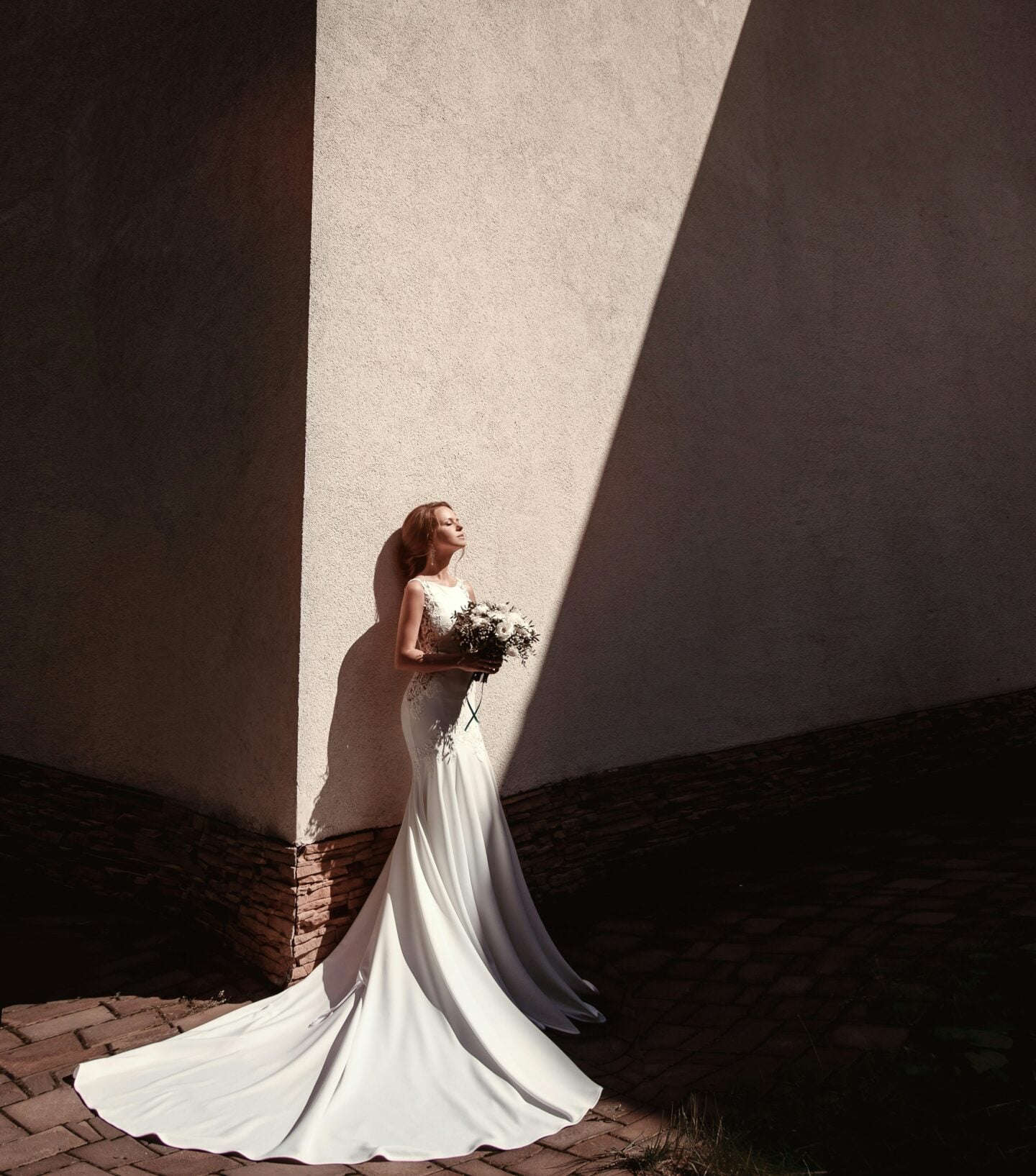
Are Designer Bridal Gowns Worth It?
The answer depends on what you mean by “worth it.” A designer bridal gown is worth its price if you are paying for the things that justify the price: fine fabrics, in-house construction in a couture atelier, the time of master pattern-makers and seamstresses, and the design vocabulary of someone who has been working in the discipline for twenty or thirty years. These are real costs, and a properly made designer gown reflects all of them in ways you can see in person and that come through in photography.
A designer bridal gown is not worth its price if you are paying for the label rather than the work. There is a perception, encouraged by some corners of the industry, that a recognisable designer name on the inside of a dress carries inherent value regardless of what the dress itself is doing. It does not. A poorly made gown from a famous house is still a poorly made gown, and the cost of the label is real money you could spend elsewhere on your wedding.
The honest middle ground is that designer bridal is worth it for brides who care about the dress as a piece of clothing first and as a status object never. Your guests will not know the brand. Your photographs will not be improved by a logo that is invisible to the camera. What will be visible is the way the fabric falls, the way the seams sit on your body, the way the silhouette holds across an eight-hour day. Those are the things designer houses get right that mass-market bridal does not, and those are the things to look at when you are deciding what level of bridal investment makes sense for you.
The 12 Labels Defining High-End Wedding Fashion
| Designer | Country | Price Range | |
| 1 | Danielle Frankel | USA | High-end |
| 2 | Elie Saab | Lebanon/France | Couture |
| 3 | Zuhair Murad | Lebanon/France | Couture |
| 4 | Berta | Israel | High-end |
| 5 | Inbal Dror | Israel | High-end |
| 6 | Mira Zwillinger | Israel | Couture |
| 7 | Ines Di Santo | Canada | High-end |
| 8 | Jenny Packham | UK | High-end |
| 9 | Phillipa Lepley | UK | Couture |
| 10 | Suzanne Neville | UK | High-end |
| 11 | Costarellos | Greece | High-end |
| 12 | Rime Arodaky | France | High-end |
Danielle Frankel
There is a reason Danielle Frankel sits at the top of this list, and it is not seniority. Frankel founded her label in 2017, which makes her one of the younger designers featured here, but she has done more in eight years to redefine what serious modern bridal can look like than most established houses manage in a generation. Trained at Parsons and at Vera Wang before launching her own house, Danielle Frankel Hirsch operates from a Garment District atelier in New York City where gowns can be designed and made to order by a small team of artisans working directly with the designer.
What sets her apart is not any single signature element but the combination of three things that rarely coexist in bridal: genuine fashion-design sensibility, transparent and accessible pricing for a couture-level house, and a willingness to push into directional territory that most established bridal designers avoid. The most recent campaign was shot by Paolo Roversi, a fashion photographer who has worked with Christian Dior in the early 1980s.
The other remarkable thing about the house is its dual offer. Most directional designers operate at one of two extremes: ready-made collection pieces that limit customisation, or fully bespoke commissions priced beyond reach. Frankel offers both, with a clear made-to-order line starting at $3,950 and a separate bespoke service designed directly with the designer. The pricing is published openly on the website, which is a small thing in the abstract and a substantial one in an industry where most ateliers often refuse to quote anything in writing.
USPs:
- Made-to-order collection pieces from $3,950, with fully bespoke commissions designed directly with Danielle and her team
- Gowns are made in the New York Garment District
- Recent editorial collaborations with photographers including Paolo Roversi, treating bridal as fashion rather than as costume
- Worn by Alexandra Daddario, Charli XCX, Alex Cooper Telsha Anderson, Naomi Biden, Julia Garner, and a roster of other fashion-industry names
- One of the few couture-level bridal houses with transparent published pricing rather than quote-on-request opacity
- Remote video consultations available for international brides, with fittings consolidated into a small number of New York visits
Elie Saab
Elie Saab is one of only a handful of officially ordained haute couture houses in the world, having been admitted as a member of the Chambre Syndicale de la Haute Couture in Paris in 2003. Founded in Beirut in 1982 when the designer was 18, the house now operates from ateliers in Paris, Beirut, and Milan, and represents the most established Lebanese couture tradition in the wedding dress market.
- Officially ordained haute couture house, one of very few in the world with this designation
- Halle Berry’s 2002 Oscar gown was the first time an Oscar winner wore Elie Saab; the house has since dressed the Princess of Wales and a long roster of red-carpet figures
- Bridal pricing transparent on the website, ranging from approximately $12,500 to $65,000+ for the spring collections
- Aesthetic skews ornate and embellished, which can read as out of step with the current trend toward minimalist bridal
- The signature cinched-waist silhouette is unmistakable, but it is also unmistakably “of the house” in a way that some brides will read as predictable
Zuhair Murad
The other major Lebanese couture house, Zuhair Murad founded his eponymous label in 1997 and has been a guest member of the Chambre Syndicale de la Haute Couture since 2005, debuting his couture collection at Paris Haute Couture Week. The brand operates from an 11-storey building in the Gemmayze district of Beirut, with a Maison de Couture in Paris’s Triangle d’Or.
- Maison de Couture on rue François 1er in Paris’s Triangle d’Or
- Worn by Adele, Taylor Swift, Jennifer Lopez, Beyoncé, Halle Berry, Blake Lively, and Princess al-Taweel for the British royal wedding
- Bridal boutique inaugurated in Beirut in 2014 with the brand’s signature ornate aesthetic
- Aesthetic register sits firmly in the dramatic-embellished category, which has been less editorial-relevant in the past few years as bridal trends have moved toward minimalism
- Pricing is opaque, with most quotes available only through the maison or accredited stockists
Berta
Berta Balilti founded her Tel Aviv–based label in 2004 after studying at the Shenkar College of Engineering and Design, and has been credited by The New York Times as one of the designers who shifted bridal toward a more sexy and bold register. The brand now operates from Ashdod, Israel, with international distribution through 60+ retailers including Saks Fifth Avenue and Nordstrom.
- One of the most recognisable house aesthetics in current bridal, defined by sheer corsetry, low backs, and figure-skimming silhouettes
- Multiple distinct lines (Berta, Muse by Berta, Privée) covering different price points and registers
- Worn by Britney Spears, Priyanka Chopra, Sharon Stone, and Carrie Underwood
- The “Berta look” is so distinctive that brides choosing the brand rarely look like they have chosen a different designer’s dress, which can be a positive (consistent house identity) or a negative (limited differentiation between brides)
- Aesthetic is unmistakably maximalist-glamour, which dates more visibly than minimalist bridal in retrospect
Inbal Dror
Inbal Dror trained at the Shenkar College of Engineering and Design in Israel and spent four years at Roberto Cavalli in Milan before launching her couture label in 2005, with bridal added in 2014. The Tel Aviv showroom is 250 square metres and now serves as the brand’s flagship, with international distribution through 75 boutiques.
- Beyoncé wore Inbal Dror to the 2016 Grammys and commissioned multiple pieces for the Formation World Tour
- Strong technical foundation from four years at Roberto Cavalli before launching her own label
- Bridal gowns retail at $8,000 to $10,000, with rental available in Israel only
- Aesthetic register skews “racy” with sheer cup corsets, dramatic cut-outs, and barely-there silhouettes, which suits some brides perfectly and is firmly wrong for others
- Less directional in design language than younger labels in the same price range, with the signature aesthetic having stayed consistent for over a decade
Mira Zwillinger
Mira Zwillinger established her couture atelier in Tel Aviv in 1991 and now runs the house with her daughter Lihi, who joined after graduating from Shenkar College in 2011. The mother-daughter design partnership is one of the few of its kind operating at this level of bridal, and the house has built a reputation for technically sophisticated made-to-measure construction that does not require physical fittings.
- Genuine mother-daughter design partnership at the head of the house, with both Mira and Lihi participating in every design
- Made-to-measure gowns can be created remotely through the brand’s hand-carved mannequin technique that allows construction without an in-person fitting until late in the process
- Made-to-measure pricing starts at $9,000, with bespoke commissions priced higher
- Distribution is exclusively through international high-end stores, which means brides outside major bridal markets need to travel for trunk shows or to Tel Aviv directly
- Pre-bridal capsule line “Zwillinger’s” extends the house aesthetic into rehearsal dinners, bachelorettes, and bridal showers
Ines Di Santo
The Toronto-based house was founded in 1984 by Italian-Argentine designer Ines Di Santo, who immigrated to Canada in 1975 after studying fine art and design in Argentina and Italy. Her daughter Veronica joined the company in 1998 as Managing Partner, and the brand has grown into one of North America’s largest luxury bridal houses.
- Every gown manufactured at the Toronto atelier under the designer’s direct oversight
- Two distinct lines (Ines Di Santo Couture and Ines by Ines Di Santo) covering different price points within the luxury tier
- Mother-daughter business partnership with Veronica running operations and Ines focused entirely on design
- Aesthetic register skews “unapologetic romantic” with heavy embellishment and dramatic silhouettes, which is a positive for brides drawn to that vocabulary and a mismatch for those drawn to minimalism
- Less editorial press coverage than the Tel Aviv and Paris-based houses at comparable price points, which means the brand is harder to find through inspiration searches but easier to actually access at appointment
Jenny Packham
The British designer founded her eponymous label in 1988 after graduating from Central Saint Martins, and has built one of London’s most recognised bridal and eveningwear houses with flagship boutiques in London (Mayfair), Paris, and New York. Packham is the most consistent designer of choice for the Princess of Wales, who has worn the label for several major public appearances.
- Mayfair flagship at 3A Carlos Place, London, with international flagships in Paris and New York
- Princess of Wales (Catherine, formerly Kate Middleton) is a longstanding client; Packham also dresses Angelina Jolie, Charlize Theron, Blake Lively, Emily Blunt, Pippa Middleton, Lily Aldridge, and Taylor Swift
- Bridal pricing $3,500 to $8,000 for collection pieces, with fully bespoke commissions starting at $10,000
- Aesthetic sits in the romantic-vintage register, which works beautifully for some weddings and reads as overly soft for others
- The brand’s broad celebrity and royal exposure means a Jenny Packham gown is more “recognisable” than less-public houses, which some brides actively want and others actively avoid
Phillipa Lepley
Phillipa Lepley is widely considered London’s leading couture bridal designer, having founded her label from a small atelier in South Kensington in 1986 and now operating from a Chelsea flagship on the Fulham Road. The house is known above all for its corsetry, which Lepley has refined over thirty-plus years and which is engineered to visibly reduce the waist by approximately two inches.
- Every gown handmade in the London Chelsea atelier from Italian Duchess satin (sourced from Lake Como), French lace, and custom Swiss embroideries
- Signature corsetry technique that mechanically defines the silhouette in ways that other houses’ construction cannot replicate
- Bespoke commissions average around £20,000, with sample gowns from £3,900 for brides willing to forgo full custom
- Lower public press visibility than houses with celebrity-driven brand identities, which suits some brides (private experience) and frustrates others (less editorial inspiration to work with at the planning stage)
- Aesthetic skews classic-feminine rather than directional or fashion-forward, which is a deliberate choice but limits the appeal for brides drawn to more contemporary design
Suzanne Neville
Founded in 1991 after the designer trained at the London College of Fashion, Suzanne Neville built one of the UK’s most recognised couture bridal houses on the strength of her structural pattern-cutting. The brand has been nicknamed “Corset Queen” within British bridal for its signature internal corsetry, and operates from flagships in Knightsbridge London and Altrincham Cheshire.
- Knightsbridge flagship at 29 Beauchamp Place, with a second flagship in Altrincham (Manchester area)
- Hand-crafted in London from European silks, satins, French lace, and hand embroidery
- Bridal pricing typically £3,000 to £10,000, with bespoke adjustments and custom modifications available
- Worn by Kate Winslet, Elle Macpherson, Jennifer Hudson, Katherine Jenkins, Holly Willoughby, and Amanda Holden across red-carpet and bridal contexts
- Aesthetic centres on body-conscious tailoring and corsetry, which means brides drawn to looser, more romantic silhouettes find fewer pieces in the collection that suit them
Costarellos
Christos Costarellos is a Greek designer based in Athens who has been producing couture bridal for over 25 years, drawing on Greek traditional elements (Aegean lace patterns, Ionic architectural rhythms) for his design vocabulary. The brand operates from an Athens flagship and distributes internationally through Net-A-Porter and MyTheresa among other retailers.
- Athens flagship with Greek artisan production, including renewable fibres and ethical sourcing
- Strong editorial press footprint including Vogue, Harper’s Bazaar, Brides, Elle, and Tatler
- Capsule collaborations with Net-A-Porter and MyTheresa make the brand available to brides without access to a stockist
- Aesthetic skews neo-romantic with bohemian undertones, which suits destination weddings and outdoor ceremonies particularly well but is a mismatch for very formal traditional weddings
- Less established physical presence outside Greece than other couture houses on this list, which means most brides experience the brand through e-commerce or trunk shows rather than direct atelier appointments
Rime Arodaky
The French designer founded her eponymous label in Paris in 2010 after training at the École de la Chambre Syndicale de la Couture Parisienne, and has built one of the most distinctive Parisian bridal houses of her generation. The brand operates from showrooms in Paris and New York, with international distribution across the UK, Belgium, and beyond.
- Maisons in Paris and New York with growing international stockist network
- Custom-made in the Paris atelier with the designer overseeing production
- Pricing approximately $5,200 to $6,500 plus tax for collection pieces
- Aesthetic register is unmistakably Parisienne: clean geometric lines combined with sheer lace, modern-bohemian, and sexier than most French bridal at this level
- The signature design language relies heavily on separates and modular pieces, which is innovative but adds a layer of styling complexity that some brides find welcome and others find overwhelming
What To Look For In A Designer Bridal Dress
The difference between a designer bridal gown that earns its price and one that does not is rarely visible from the front of the dress at the appointment. The questions worth asking, in order of importance:
- Where is it made? This is the single most useful question, and the answer changes the calculation for every other consideration. A gown made in the designer’s own atelier in the country where the brand is based is meaningfully different from one made by a contracted factory in a country the brand has no operational connection to. Houses that produce in-house in their own ateliers (the Garment District for Frankel, Tel Aviv for Mira Zwillinger, Chelsea for Phillipa Lepley) are paying their own seamstresses and pattern-makers; houses that contract production elsewhere are paying someone else, with all the quality control limitations that implies. Ask directly: “Where is this dress made?” and follow up if the answer is vague.
- What are the fabrics, and where are they sourced? Designer bridal at this level uses Italian Duchess satin, French Chantilly and Alençon laces, Swiss embroideries, and Japanese silks. These fabrics have specific origins (often, in the European cases, traceable to specific small towns and family-owned mills) and they perform differently from machine-made polyester blends in ways that affect both photography and feel. Ask which fabric a particular gown uses, and where it comes from.
- What is the construction process? The houses on this list typically work through a multi-fitting process: pattern-making, toile (a draft version in calico or muslin), first fitting in the chosen fabric, refinement, and final fitting. This usually takes between three and six fittings depending on complexity. A house that quotes one or two fittings is operating at a different level of construction; a house that quotes seven or eight is doing serious bespoke work.
- What is included in the price, and what costs extra? Designer bridal pricing is rarely all-inclusive. Some houses include initial alterations, others charge separately at $500 to $1,950+. Some include the toile, others quote it as a separate fee. Some include rush production, others charge 25% to 50% on top. Ask for a written quote that breaks out everything, and confirm what is and is not included before placing the order.
- How long is the lead time? Couture bridal at this level typically requires nine to twelve months from initial consultation to delivery, with twelve to eighteen months more comfortable for fully bespoke commissions. A house that promises a couture-level gown in three months is either rushing in ways that compromise quality or operating from existing stock rather than producing something genuinely made for you.
FAQs
How much should I expect to spend on a designer bridal gown?
The realistic floor for designer bridal from one of the houses on this list is approximately $3,000 to $4,000 for a collection piece in the most accessible part of the range. The middle of the market sits at $5,000 to $10,000 for made-to-order collection pieces, with bespoke commissions and high-couture pieces ranging from $12,000 to $60,000+. The price reflects the fabric, the construction time, and the labour at the level of skill required to do this kind of work.
Are designer bridal gowns worth resale?
Some are. Designer bridal does not depreciate at the same rate as ready-to-wear fashion, and recognisable houses with strong secondary-market demand can hold significant resale value through dedicated bridal resale platforms. A made-to-measure gown is typically harder to resell than a collection piece because the fit was specific to the original wearer. If resale is part of your decision-making, ask the house in advance whether the gown can be altered easily for a different body shape after the wedding.
Why do designer ateliers refuse to publish prices?
A combination of historical industry convention and practical pricing complexity. Couture-level bridal pricing depends on so many variables (fabric upgrades, customisation, lead time, embellishment) that a published list price would be misleading more often than helpful. The trade-off is that opaque pricing can also mask wide differences between houses charging similar amounts for very different levels of work, which is why asking specific questions about construction and inclusions matters. However, unlike many other designer brands, some – like Danielle Frankel – are transparent and publish pricing.
Can I order a designer gown remotely if I don’t live near a stockist?
Yes, and most of the houses on this list have well-developed processes for international and out-of-state brides. The standard approach combines initial consultation by video, measurements taken locally and sent to the atelier, a toile mailed for first fitting at home or with a local seamstress, and then one or two trips to the atelier for final fittings. Some houses (Mira Zwillinger notably) have developed remote-fitting techniques that minimise the need for in-person visits entirely.
Thanks for stopping by!
Magda
xoxo
<3