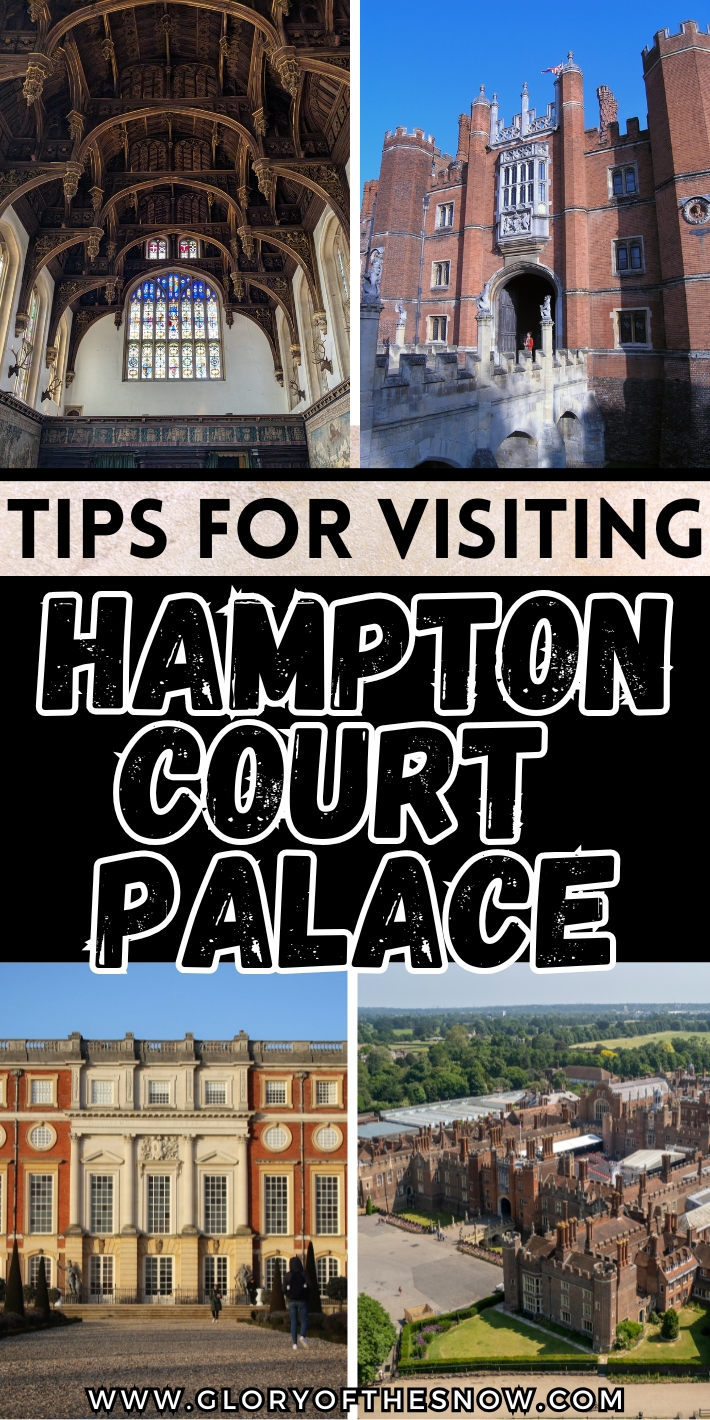
When most people think of visiting royal palaces near London, their minds immediately jump to Buckingham Palace or Windsor Castle.
But for me, Hampton Court should be at the top of your itinerary. One of the most lavish buildings in London, it’s a journey through 500 years of Britain’s royal history. And it was the favourite palace of probably the most famous King we ever had – Henry VIII.
![Henry VIII of England, portrait by Hans Holbein the Younger (from Spamers Illustrierte Weltgeschichte, 1894, 5[1], 579)](https://www.gloryofthesnow.com/wp-content/uploads/2025/12/Henry-VIII-of-England-portrait-by-Hans-Holbein-the-Younger-from-Spamers-Illustrierte-Weltgeschichte-1894-51-579-1440x1968.jpeg)
From the Tudor Great Hall where Henry feasted to the Baroque apartments of William III, from supposedly haunted corridors to Britain’s oldest surviving maze, Hampton Court offers something genuinely special. In this guide, I’ll take you through the palace’s highlights, share its stories, and give you all the practical information you need for a perfect day trip.
The Two Palaces Of Hampton Court
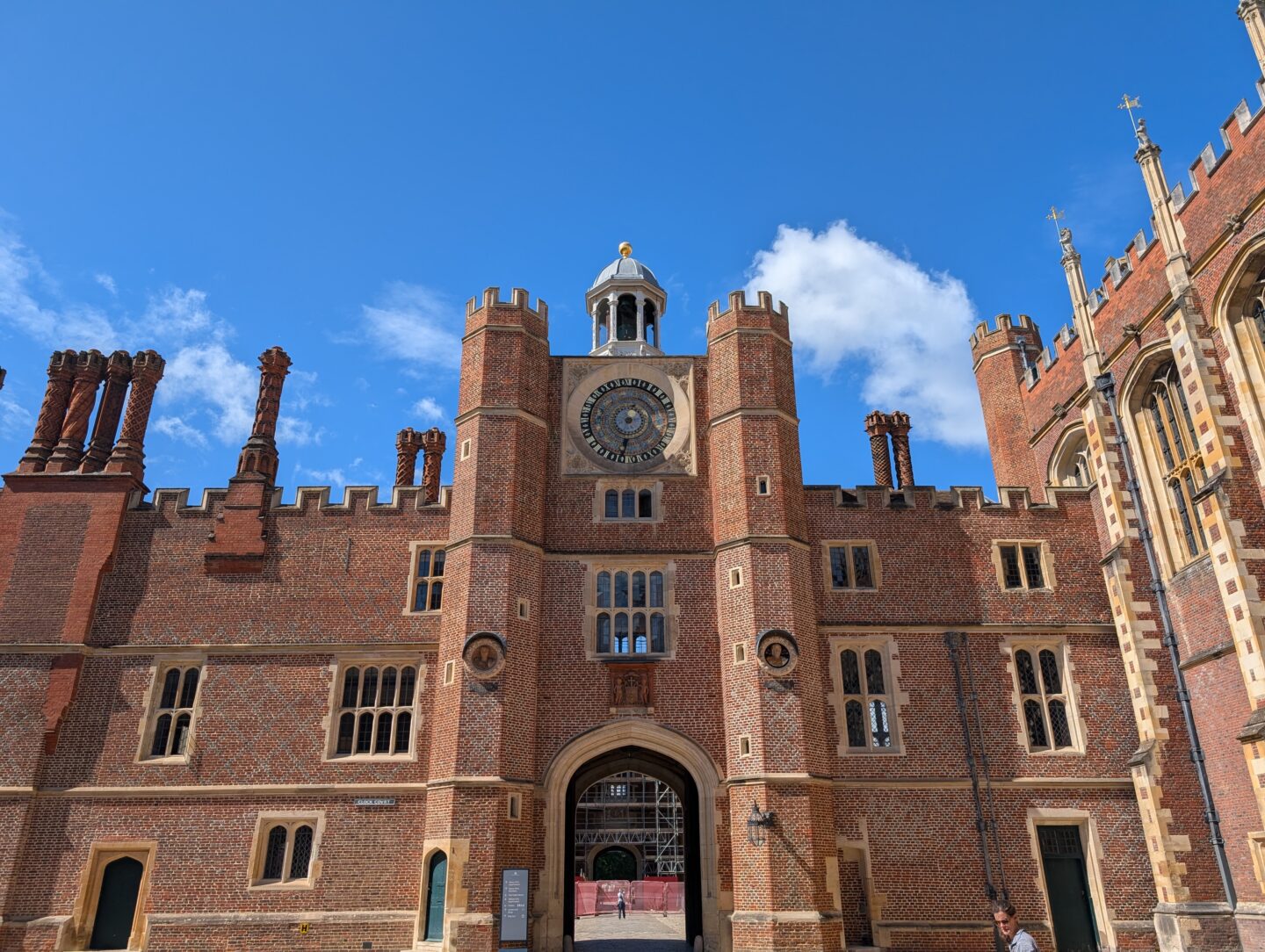
Part of Hampton Court’s charm is its duality – two palaces joined together, two different styles, reflecting two distinct eras of British history.
Hampton Court’s story begins in 1515 when Cardinal Thomas Wolsey, Henry VIII’s powerful Lord Chancellor, began building what he intended to be England’s most impressive palace.
He clearly did a good job. But, unfortunately for him, King Henry VIII thought so too. The King was so impressed that he took the palace for himself.
Henry VIII transformed Hampton Court into the center of his court, hosting lavish banquets in the Great Hall and expanding the palace to accommodate his enormous household.
The palace witnessed some of the most dramatic moments in Tudor history – it’s where Henry married his sixth wife Catherine Parr, and where his third wife Jane Seymour gave birth to the long-awaited male heir, Edward VI, before dying just days later.
After Henry VIII’s death, the palace fell out of favour. His daughters Mary and Elizabeth I preferred other residences, and the Stuart kings rarely visited.
But 150 years later, the new monarchs – William III and Mary II – decided the old palace needed modernising.
They commissioned legendary architect Sir Christopher Wren, most famous for St Paul’s Cathedral to rebuild large sections in the fashionable Baroque style.
The original plan was to replace the entire historic Tudor palace. But, thankfully, they ran out of money before demolishing much of it, leaving us with this fascinating architectural split personality – half Tudor palace, half Baroque elegance.
The Great Hall: Henry VIII’s Centerpiece
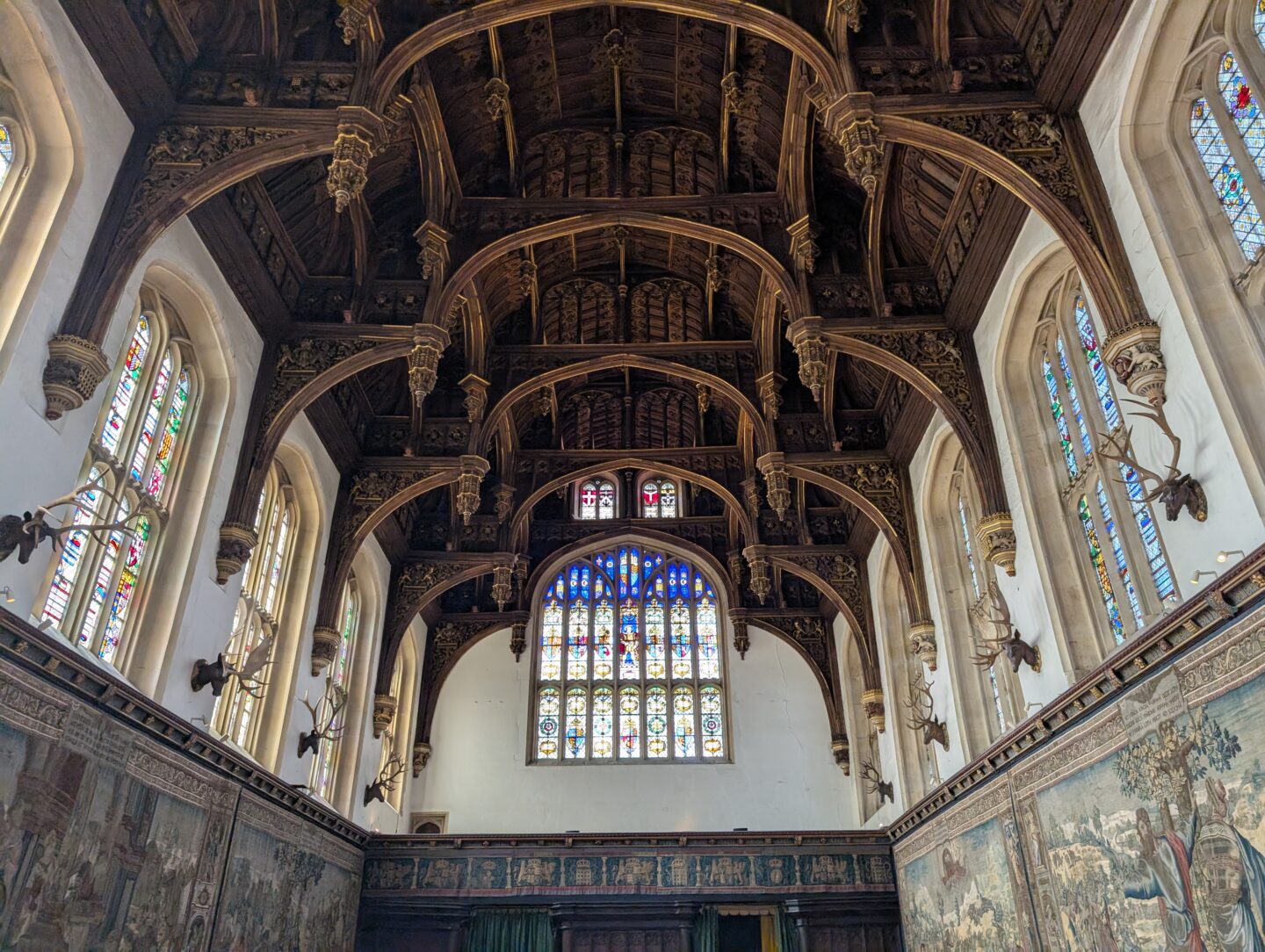
The highlight of most visits to Hampton Court is, of course, Henry VIII’s Great Hall. This is where the king feasted, entertained, courted and impressed.
There are many highlights in this majestic, 500 year old hall. Most impressive, perhaps, is the hammer-beam roof which soars above you, a masterpiece of Tudor carpentry.
Stand in the center of the hall and imagine it filled with hundreds of courtiers, the sound of musicians playing from the gallery, the smell of roasted meats from the kitchens. This room witnessed marriage negotiations, diplomatic triumphs, and probably quite a few arguments about the Reformation.
The Haunted Gallery
Every grand palace needs a ghost story, and Hampton Court has a particularly persistent one.
If there’s one thing you know about Henry VIII it’s this: divorced, beheaded, died, divorced, beheaded, survived.
The second beheaded in that little rhyme was Catherine Howard, Henry’s fifth wife, executed for adultery.
The Haunted Gallery supposedly echoes with her screams, echoing from when she ran down this corridor trying to reach the king to protest her innocence before her arrest.
Multiple security guards and visitors have reported strange occurrences in this gallery – sudden cold spots, doors opening on their own, and that feeling of being watched. It’s supposedly one of the most haunted spots in the country.
In 2003, CCTV cameras captured footage of a figure in Tudor dress opening the fire doors. The palace investigated thoroughly but found no explanation.
Whatever your thoughts on ghost stories, there’s something undeniably eerie about walking through the Haunted Gallery. Perhaps it’s the centuries of history, and the tragedies from Henry VIII’s cruelty echoing down the year.
The Tudor Kitchens
If you know anything else about Henry VIII, it’s probably that the man had an appetite. By his later years, he was obese.
To feed his never-ending hunger, as well as his court of over 1,000 people, needed quite the operation.
The Tudor kitchens, which you can visit today, are testament to this. The scale is staggering. There are separate rooms for preparing fish, meat, and pastries.
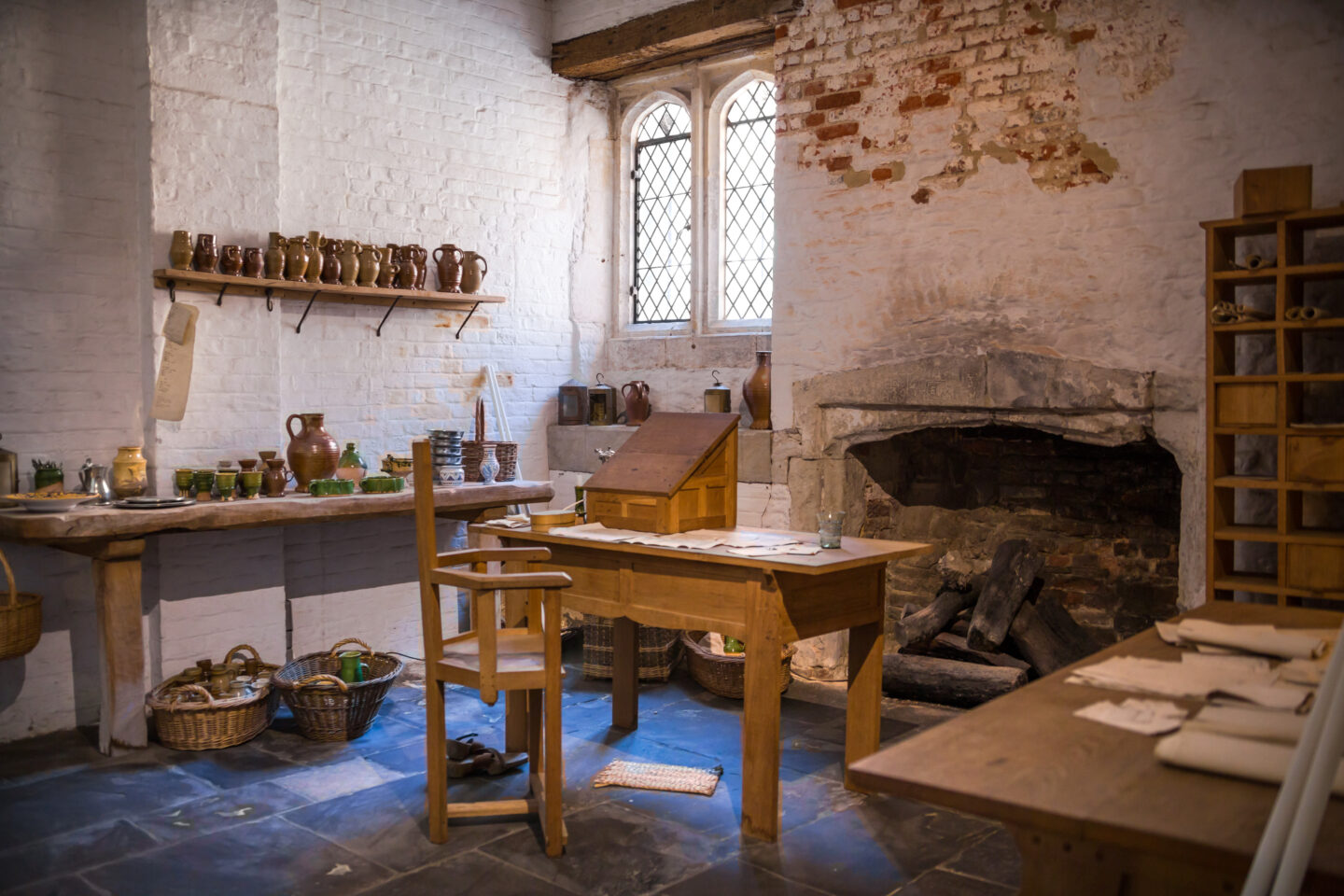
Credit: IRStone – stock.adobe.com
There’s a Great Kitchen with six massive fireplaces. There’s even a Boiling House specifically for cooking large joints of meat. The palace employed over 200 kitchen staff who worked in shifts to keep the court fed.
The King’s Apartments: Baroque Splendour
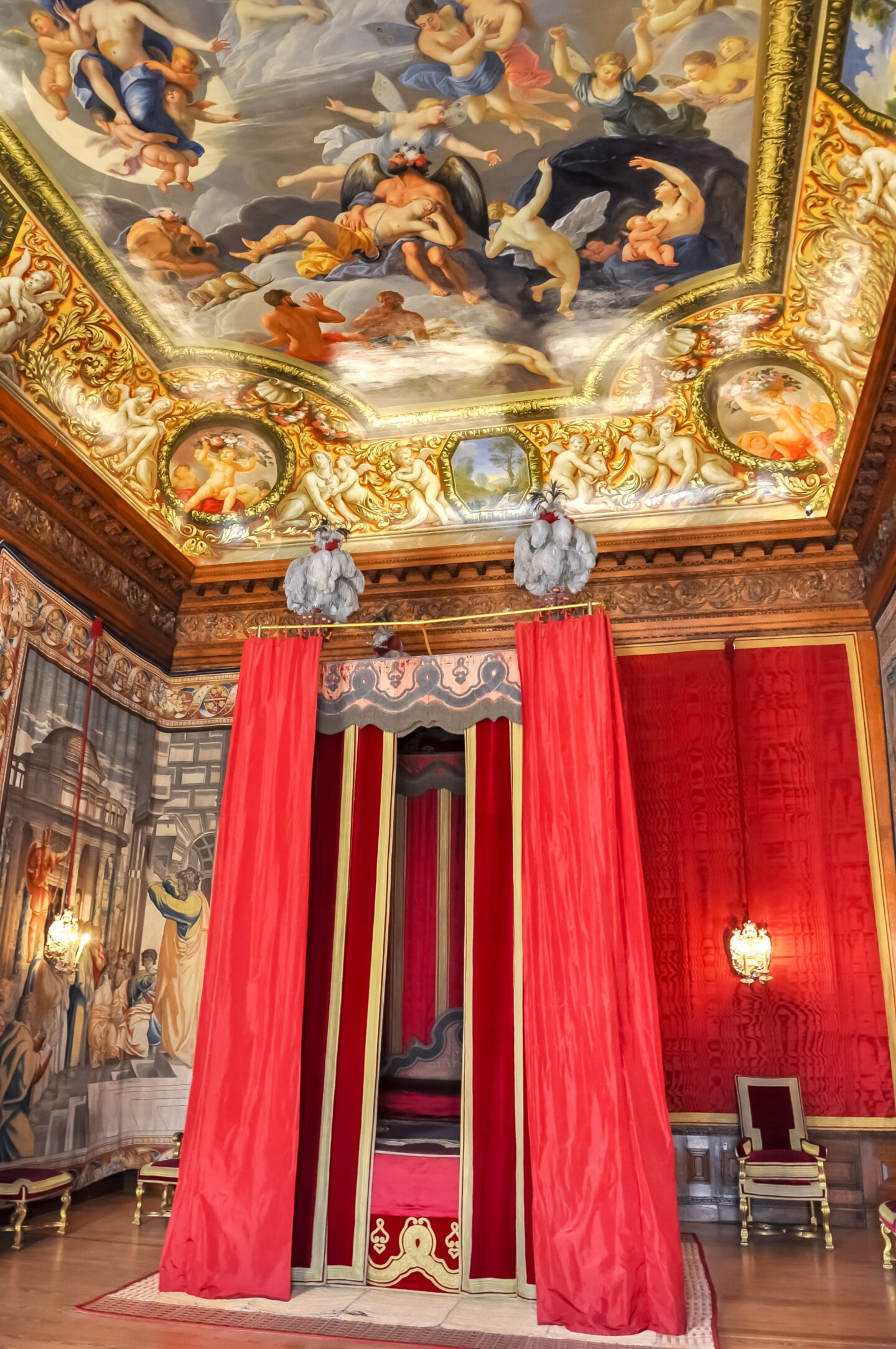
Credit: Mistervlad – stock.adobe.com
The shift from the Tudor palace to William III’s Baroque apartments is dramatic. Gone are the dark wood panels and intimate spaces. Instead, you enter a progression of increasingly grand rooms designed to impress visitors with the king’s wealth and power.
The King’s Staircase sets the tone – walls covered in trompe-l’œil paintings by Antonio Verrio showing William III as Alexander the Great. The Guard Chamber features 3,000 weapons arranged in decorative patterns on the walls. The Presence Chamber contains the throne where visitors would be granted an audience with the king.
Each room was designed to make visitors wait, building anticipation before finally reaching the king, much of it exquisitely designed by Sir Christopher Wren.
The Vast Gardens Of Hampton Court
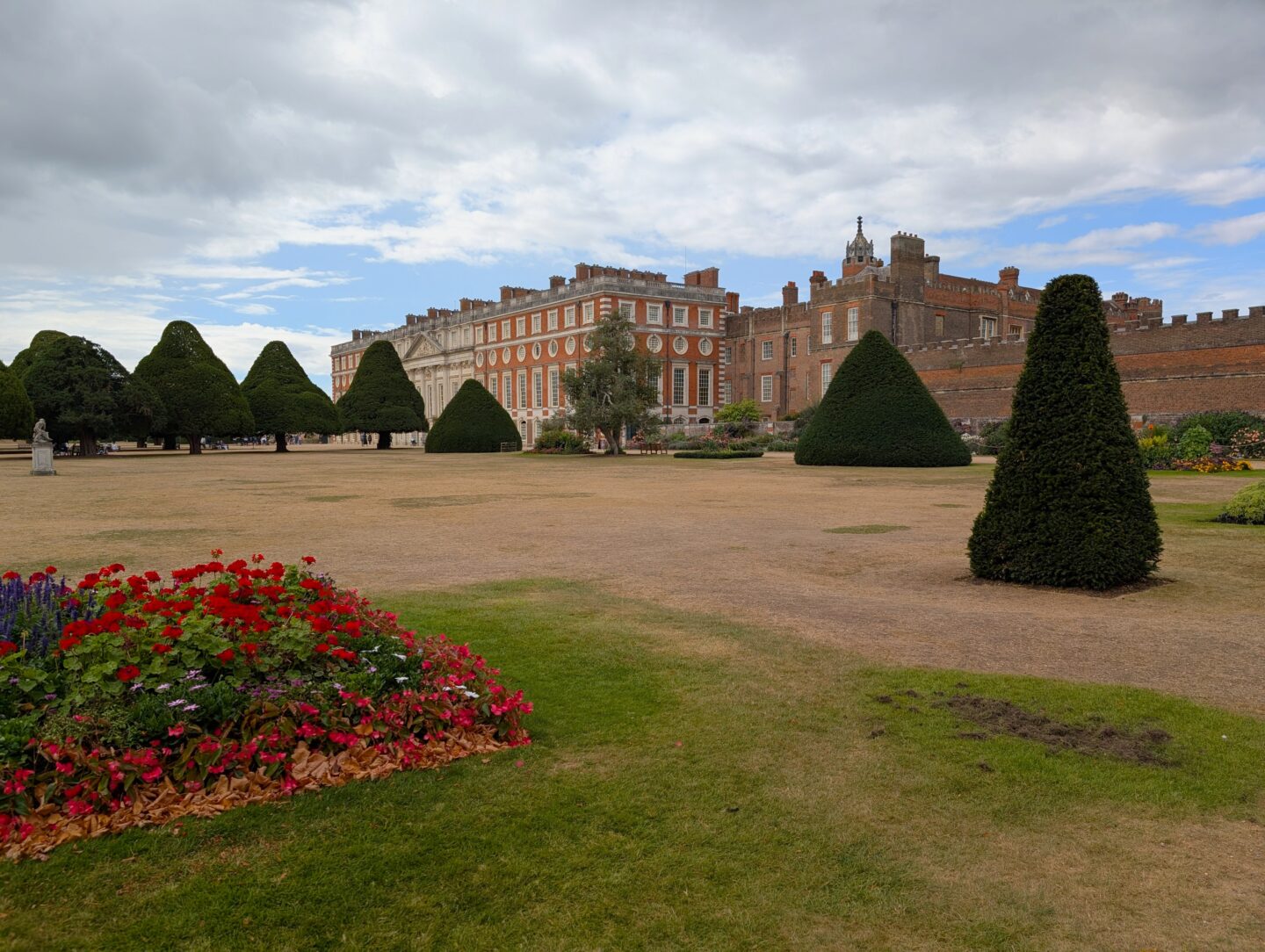
If the palace is impressive, the gardens are extraordinary. Hampton Court’s gardens span 60 acres and represent several centuries of garden design, from Tudor knot gardens to Victorian exotics.

You could lose hours exploring the vast gardens – but if there’s one thing you have to do while in Hampton Court, it’s the maze.
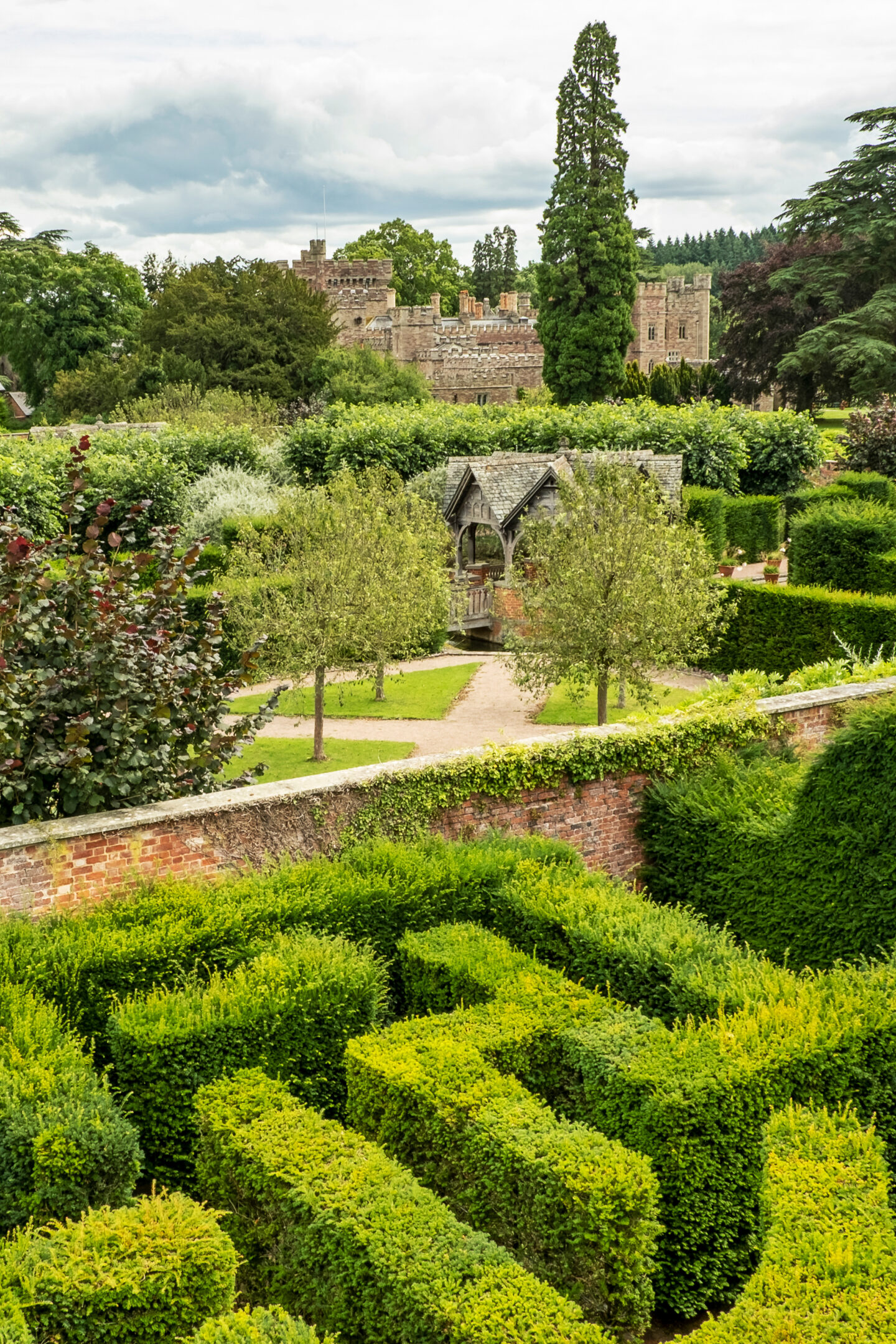
Planted around 1700, it’s Britain’s oldest surviving hedge maze. It covers a third of an acre and uses half a mile of pathways to confuse visitors. The goal is simple: reach the center. The execution is frustratingly difficult.
The maze uses hornbeam hedges and a deliberately deceptive design. There’s no single trick to solving it – you’ve just got to navigate by trial and error.
Things To Do Near Hampton Court

Although it’s on the edge of London, there’s plenty to do close to Hampton Court. It’s in the beautiful, green borough of Richmond upon Thames – home to the famous Richmond Park, plus one of the most beautiful stretches of the River Thames, a historic town centre, and plenty of museums.
Discover more attractions in the area in my Richmond museums guide or explore my full London museum guide covering 200+ museums across all 32 boroughs.
Planning Your Visit To Hampton Court Palace
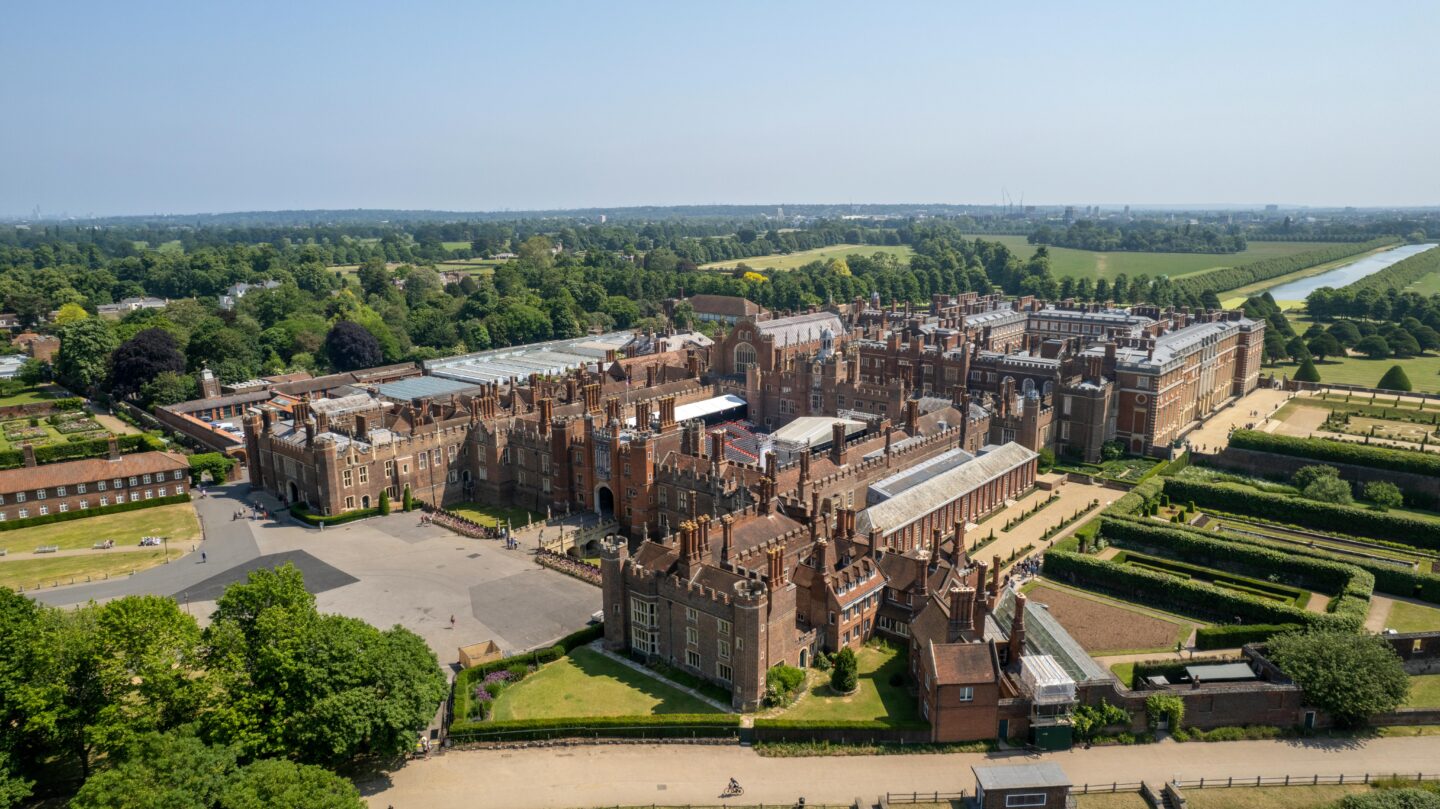
Getting to Hampton Court Palace from London
Hampton Court is right on the edge of London, in the borough of Richmond (made famous by Ted Lasso). But it’s very easy to reach from central London.
The quickest route is by train from London Waterloo to Hampton Court station (approximately 35 minutes). The station is right beside the palace – you’ll see the palace gates as you exit.
If you’ve got the time, a more scenic route is to take the riverboat from Westminster Pier. The journey takes about three hours but offers beautiful views along the Thames.
How long to spend at Hampton Court
You should allow a full day for your visit. You could rush through in three hours, but you’d miss so much. And as well as the key highlights I’ve outlined in this blog, there are exhibitions on the Tudor world to explore, plus temporary or special installations.
Food and refreshments
The Tiltyard Café offers hot meals, sandwiches, and cakes. It’s pleasant enough but can get very busy during peak times. The Privy Kitchen Coffee Shop in the palace serves lighter refreshments.
Alternatively, pack a picnic and find a quiet spot in the gardens. There are plenty of benches, and on a sunny day, eating lunch under a tree while looking at the palace is rather special.
Why Hampton Court Deserves Your Time
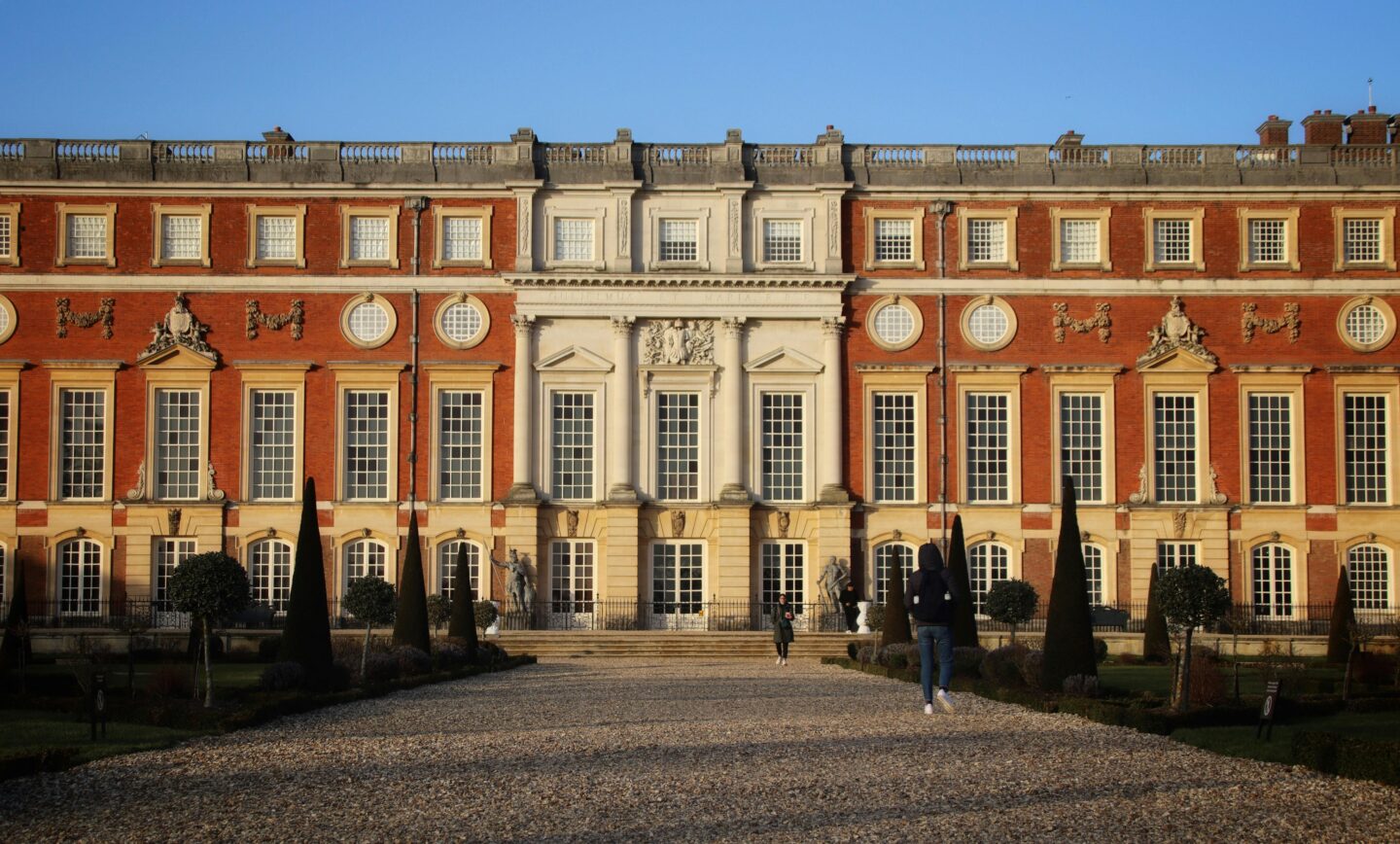
Hampton Court isn’t as famous as Buckingham Palace or as dramatic as the Tower of London, but in many ways, it’s the most rewarding royal palace to visit near London. Especially if, like me, you’re fascinated by Tudor history and the story of Henry VIII. For this, there really is nowhere better to visit.
The palace also does an excellent job of bringing history to life through costumed interpreters, interactive displays, and regular events.
On my most recent visit, for example, we stumbled into a free talk about Anne Boleyn and watched a mini-play about Black Tudor musicians in the Great Hall. It’s always worth checking out what events are on the day of your visit.
Finally, Hampton Court is one of those places you can visit all year round. A lot of the sights are indoors. Add to this its annual ice rink and Christmas market, it’s one of the best things to do in London in the Winter.
But it’s Spring and Summer that are best for exploring the vast gardens. In Spring they’re at their most beautiful, while in Summer the Palace hosts a large series of events – including its annual flower festival, a rival to the famous Chelsea Flower Show, and the excellent Hampton Court Food festival.
Whenever you visit, Hampton Court is always one of the most magical day trips from London.
About the author
Written by Jamie George, the creator of What’s down that street? Jamie is a writer and long-time Londoner with a passion for history, architecture and museums. They’ve travelled widely across the UK and Europe, writing for a range of online travel publications and sharing stories that uncover the hidden histories behind the streets and buildings we walk past every day. To learn more – visit whatsdownthatstreet.com.
Thanks for stopping by!
Magda
xoxo
If you enjoyed this post, pin it on Pinterest to come back to it whenever you want and help it reach more readers!
***PIN IT***