If your towel Radiator Village is only warm at the top, or it heats up slower than the rest of the radiators in your home, it might not be balanced properly. Don’t worry – this isn’t about acrobatics. Balancing your towel radiator just means adjusting the flow of water so it heats evenly and efficiently, along with the rest of your system.
In this guide, we’ll walk you through why balancing is important, how to do it step-by-step, and how to spot when something more might be going on. We’ll keep it straightforward – you don’t need to be a plumber or heating engineer to get it sorted.

Why Balance Your Towel Radiator?
A central heating system works by pushing hot water through your radiators. But if some radiators are closer to the boiler, they might get more flow than others. That can leave your towel radiator – often tucked away in the bathroom and far from the boiler – underperforming.
Here’s what happens when things aren’t balanced:
- Some radiators (often the nearest ones) get too hot.
- Others, like your towel rail, stay lukewarm or even cold.
- Your boiler works harder trying to heat everything.
- You waste energy and money.
By balancing your radiators, you’re basically telling the system, “Hey, spread the heat love evenly!”
What You’ll Need
Before you start, gather a few basic tools:
- A radiator bleed key
- An adjustable spanner or wrench
- A screwdriver (flathead, usually)
- A digital thermometer or infrared temperature gun (optional but helpful)
- Some towels or a small container (in case of water drips)
Step-By-Step: How To Balance A Towel Radiator
Step 1: Bleed Your Radiators
Before balancing anything, make sure all the radiators in your home – including your towel radiator – have been bled.
To bleed a radiator:
- Turn off your heating and let everything cool.
- Use a radiator key to open the bleed valve slightly (top side of the radiator).
- Listen for a hiss – that’s air escaping.
- When water starts dribbling out, close the valve.
- Wipe any drips and move on to the next radiator.
Bleeding removes trapped air and ensures the whole system is filled with water – crucial for accurate balancing.
Step 2: Turn Off the Heating
Once all radiators are bled, switch off the heating and let the system cool completely. This allows you to work safely and resets the temperatures across the system.
Step 3: Note the Order Your Radiators Heat Up
Now, turn your heating back on and observe which radiators heat up first. You’ll want to walk around your home and take notes or label your radiators based on the order they warm up.
Generally:
- The first radiators to heat up are closest to the boiler.
- The last ones (often your towel radiator) are furthest away.
This order helps guide which radiators need restricting and which need more flow.
Step 4: Turn Off the Heating Again
Once you’ve made your notes, switch the heating off again and allow everything to cool down before making adjustments.
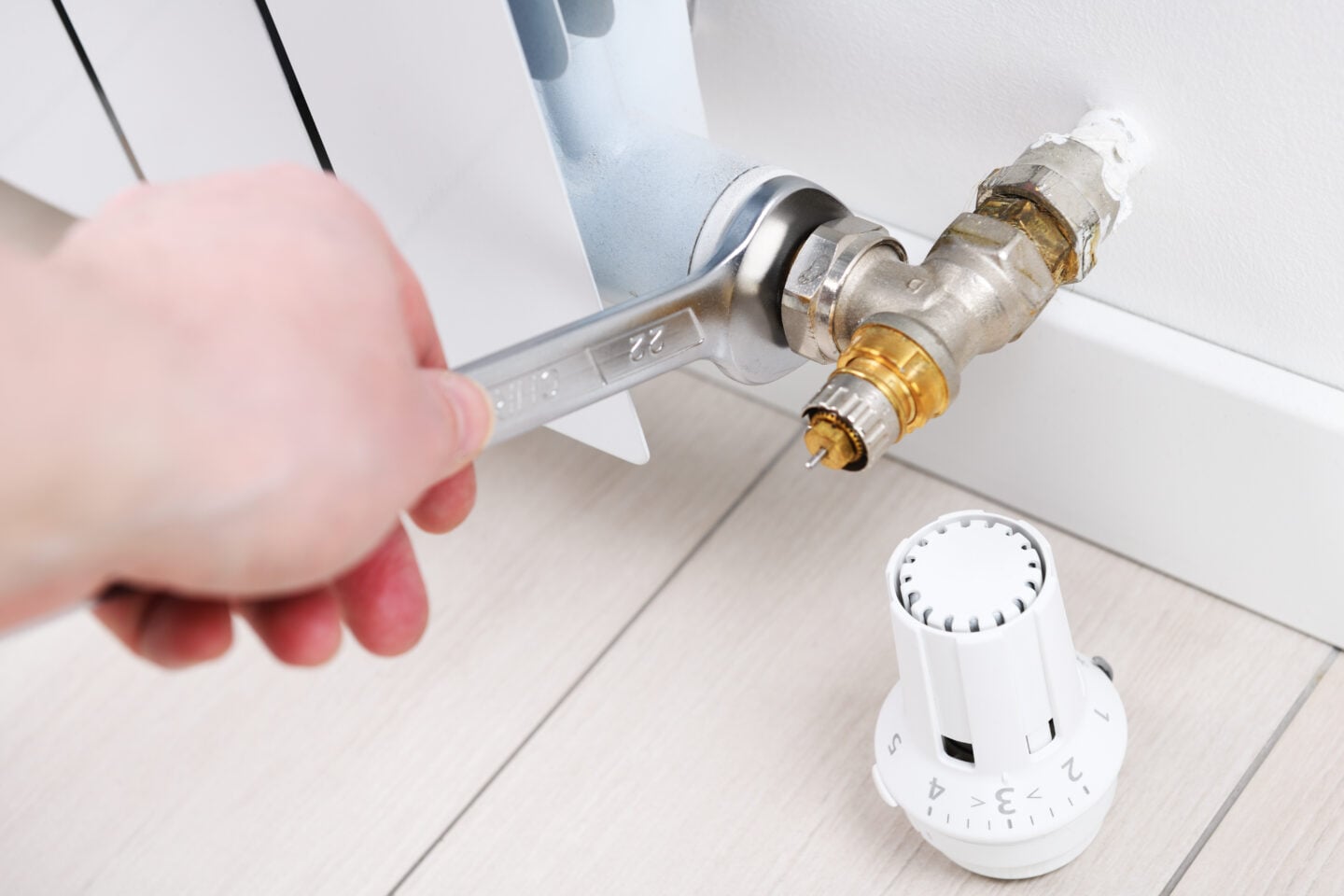
Step 5: Adjust the Lockshield Valve
Each radiator has two valves: the thermostatic valve (or manual valve) and the lockshield valve. The thermostatic valve controls the heat you want in the room. The lockshield valve, usually covered with a white plastic cap, controls how much hot water flows into the radiator.
To balance your towel radiator (and the rest of your system), you’ll mainly adjust the lockshield valves.
Here’s how:
- Remove the plastic cap from the lockshield valve.
- Use your spanner to slightly open or close the valve. Turning it clockwise restricts flow; turning it anti-clockwise allows more.
- For radiators that heat up quickly (those closest to the boiler), close the valve slightly to reduce flow.
- For slower heating radiators (like your towel radiator), open the valve a bit more to increase flow.
Do this gradually, testing the system as you go.
Step 6: Test and Fine-Tune
Once you’ve adjusted all the radiators, turn your heating back on and check:
- Does the towel radiator now get warm from top to bottom?
- Are all radiators heating evenly?
- Is the system quieter or more efficient?
You may need to go through one more round of tweaking if things still seem uneven. Be patient – small changes make a big difference.
Optional: If you’re using a digital thermometer, aim for about a 12–20°C drop between the flow (pipe into the radiator) and the return (pipe out). This indicates efficient heat transfer.
Common Issues (and Fixes)
If balancing doesn’t fix the towel radiator, consider:
- Airlock: Even after bleeding, air might be trapped in the pipework.
- Sludge buildup: Especially in older systems. A power flush or magnetic filter may help.
- Pump setting: Your boiler’s pump might need adjusting (a job for a heating engineer).
- Thermostatic valve stuck: The pin inside may be stuck. You can gently free it up.
Bonus Tip: Use Radiator Valves Properly
Thermostatic valves should be used to control the room temperature, not to turn radiators on and off. Always leave them set between 2 and 5 for best efficiency.
And don’t forget to turn them back up in the winter if you lowered them in summer!
Need A New Towel Radiator?
Sometimes, balancing helps, but the radiator itself might just be too old or undersized for the room. If your towel rail is still cold or not doing its job, it might be time for an upgrade.
You can browse a wide range of towel radiators online at Radiator Village – from sleek designer styles to practical models that won’t break the bank. Whether you’re after a modern matte black finish or classic chrome, they’ve got something to suit every bathroom.
Final Thoughts
Balancing a towel radiator is one of those small DIY jobs that can make a big difference. It helps your entire heating system work better, saves you money, and keeps your bathroom toasty – exactly what you want when stepping out of the shower on a cold morning.
It’s worth spending an hour or two getting it right, and now you know how. And if your current towel rail just isn’t cutting it anymore, remember: you can always upgrade online from Radiator Village, where quality and style meet convenience.
Stay warm – and balanced!
Thanks for stopping by!
Magda
xoxo
<3