Recharging your day is sometimes necessary but often challenging to actually do. Whether at work or at home, a quick pick up is often needed. However, rather than reaching for caffeine and a snack, have you considered the little power plant in your head? The brain can be engaged to get you going again if you do it the right way. Of course, it can be hard at first, like any kind of exercise, but mental exercise with math teasers and focus challenges can be what you need.
Solve A Quick Word Game
There are many quick word games that offer a reprieve from the stress of daily life. When you need a pick-me-up alongside a cup of coffee, something like a word search, Wordle, or crossword can be just what you need. These are classic games that act as a brain trainer, with numerous results that can benefit your mind and focus. This includes activating the verbal language areas of your brain and improving your overall long and short-term memory.
Recharging Your Day With Math Teasers
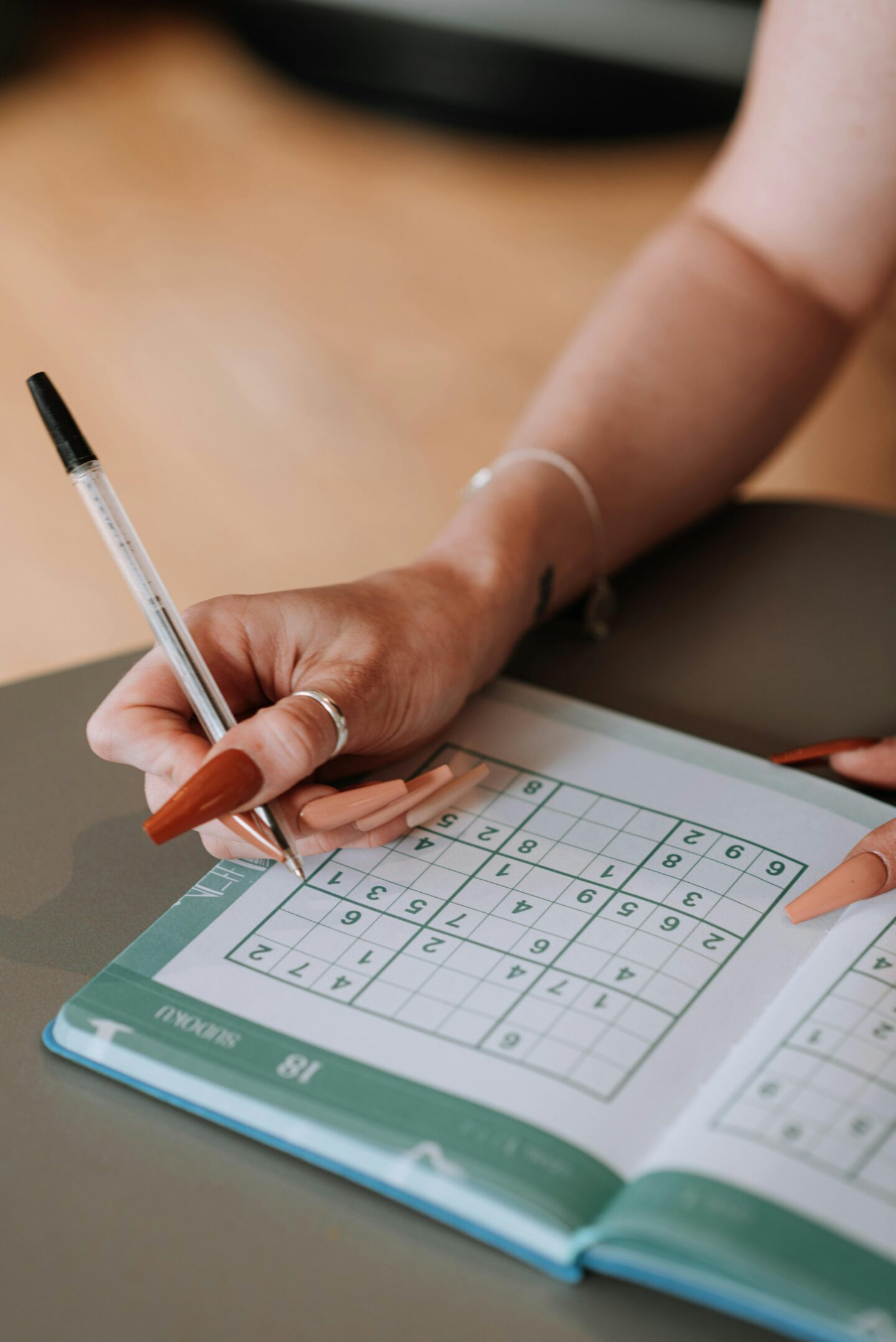
Not everyone enjoys quick word games, and some people prefer math teasers. One of the best known is Sudoku, which can help your brain focus and engage at a higher level in a short space of time. If math is more your thing, then you can reap the short-term benefits of these games:
- Math games force your brain to look ahead and result in improved concentration.
- Logical number placement in games like Sudoku also increases short-term memory.
- As a beginner, getting better at these kinds of games can help reduce math anxiety.
Spatial Reasoning In Three Dimensions
Many quick puzzles are presented as 2D number or word games, and there’s no other way to present these. However, the brain can be engaged in more ways than one, and spatial reasoning is a popular method. 3D puzzles such as “Ball in Jail” can engage the logical and creative sides of your brain to work together, helping boost your focus and sharpen problem-solving. As a result, you will also get a nice hit of dopamine when you solve it!
Focus On Spot The Difference Teasers
One of the oldest and most beloved brain puzzles is spotting the difference. While simple in nature, these can actually be pretty challenging, and there is always something you just can’t find! The subtle differences between two almost identical images can be enough to drive your brain into gear and offer multiple benefits. For instance, this kind of puzzle improves your ability to focus while improving your visual observation skills, both of which can be useful in life.
Recharging Your Day With 1-Minute Memory Games
Math games and word games alike are pretty popular with Coolmath Games alone reporting over 40 million users. While on your break and dreaming of the perfect escape, you can pass the time and be entertained with one-minute teasers that can help improve your overall memory.
The tray game
Place 10 to 20 items on a tray and stare at them for 1 minute. After the one-minute mark has passed, try to list as many of them as you can. This is an excellent long-term memory game.
Memory matching
Use online, app-based, or physical playing cards to find all the pairs within a full deck. This can improve memory over time and boost the brain by engaging creative and logical reasoning.
Picture staring
If there are two people, try the picture staring game. Stare at a picture for one minute and then have the other person ask questions about colours, small details, and object positions.
You can find variations of most of these games online, but you don’t need the internet, as they can all be played physically, too. Unlike many puzzle games, you can easily play these with others too, and almost anything can be part of the games, such as magazines and photos.
A Quick Mental Shift With Anagrams
Like spot the difference puzzles, anagrams are word-based games that engage the brain in multiple ways. If you need something to improve your vocabulary and extend your language skills, this is just what you need. You can find lots of free anagram games online, such as Pogo, Anagramania, and Anagram at Wordwall. However, because they are so popular, you will also find tons of anagram games in word puzzle books, newspapers, and magazines.
Riddle Yourself This!
If you really want to challenge yourself, how about a one-minute riddle? Riddles are among the most popular puzzles because they are rewarding when you solve them. Be aware, though, that they can also be among the most infuriating and annoying if you cannot solve them! Popular riddles like “farmer crossing the river” provide much more than a focus boost. They engage the logical side of your brain and are designed to provide a mental break from routine tasks,
Recharging Your Day With A Focus Challenge
Sometimes you need to focus on a specific improvement that can help reset the brain and get into boost mode. A focus challenge can be done in three to five minutes and will help with memory and mental agility. So, for a quick refresh of the mind during the day, try these:
- If you are at work, commit to working hard on one specific task for five minutes.
- To calm the mind, take two minutes to write down all distractions as a memory dump.
- You can force intense cognitive engagement by counting down from 100 by 7s.
Brain-Boosting With Codes And Cryptograms
Finally, we have perhaps the most challenging brain puzzles. Codes and cryptograms aren’t for everyone, and they can get pretty complex. But if you really like a challenge and torturing yourself, these can be just what you need to pick yourself up throughout the day. The feeling of cracking these is like nothing else you will have, bragging rights. Code-breaking is one of the best types of puzzles for keeping the mind sharp over a long period for good brain health.
Summary
Solving a quick word game, such as a crossword, can help recharge your day with little teasers. Focused, one-minute puzzles are excellent when you need a quick pick up that engages the mind, and for a more rewarding puzzle, you can try deciphering a code or cryptogram game.
Thanks for stopping by!
Magda
xoxo
<3