Walking into a flower shop or browsing online arrangements can feel overwhelming when you’re faced with endless options. Cascading bouquets, structured designs, wildflower bundles, and formal centerpieces – the world of types of floral arrangements is vast and varied. Understanding the fundamental categories, styles, and design principles helps you make informed choices whether you’re ordering flowers for a special occasion, decorating your home, or exploring floral design as a creative outlet.
Floral arrangement isn’t just about putting pretty flowers in a vase. It’s an art form with structure, terminology, and techniques that have evolved over centuries. Knowing the differences between types of flower bouquets transforms you from a casual flower buyer into someone who can confidently select or create arrangements that truly resonate.
Types Of Flower – The Essential Palette
Before diving into arrangement styles, it’s crucial to understand the basic types of flowers that underpin floral design. Florists categorize blooms into four main groups based on their role in arrangements.
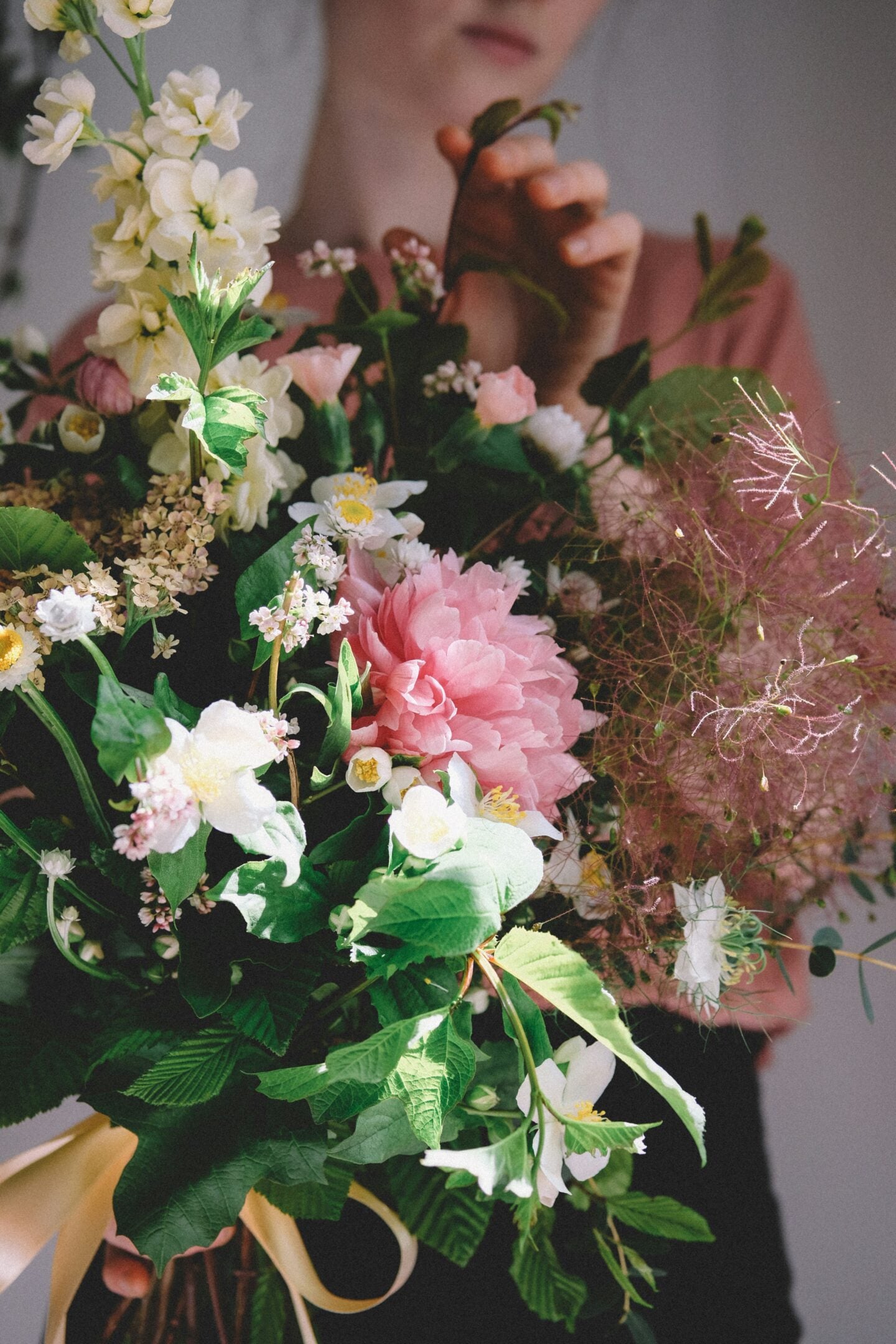
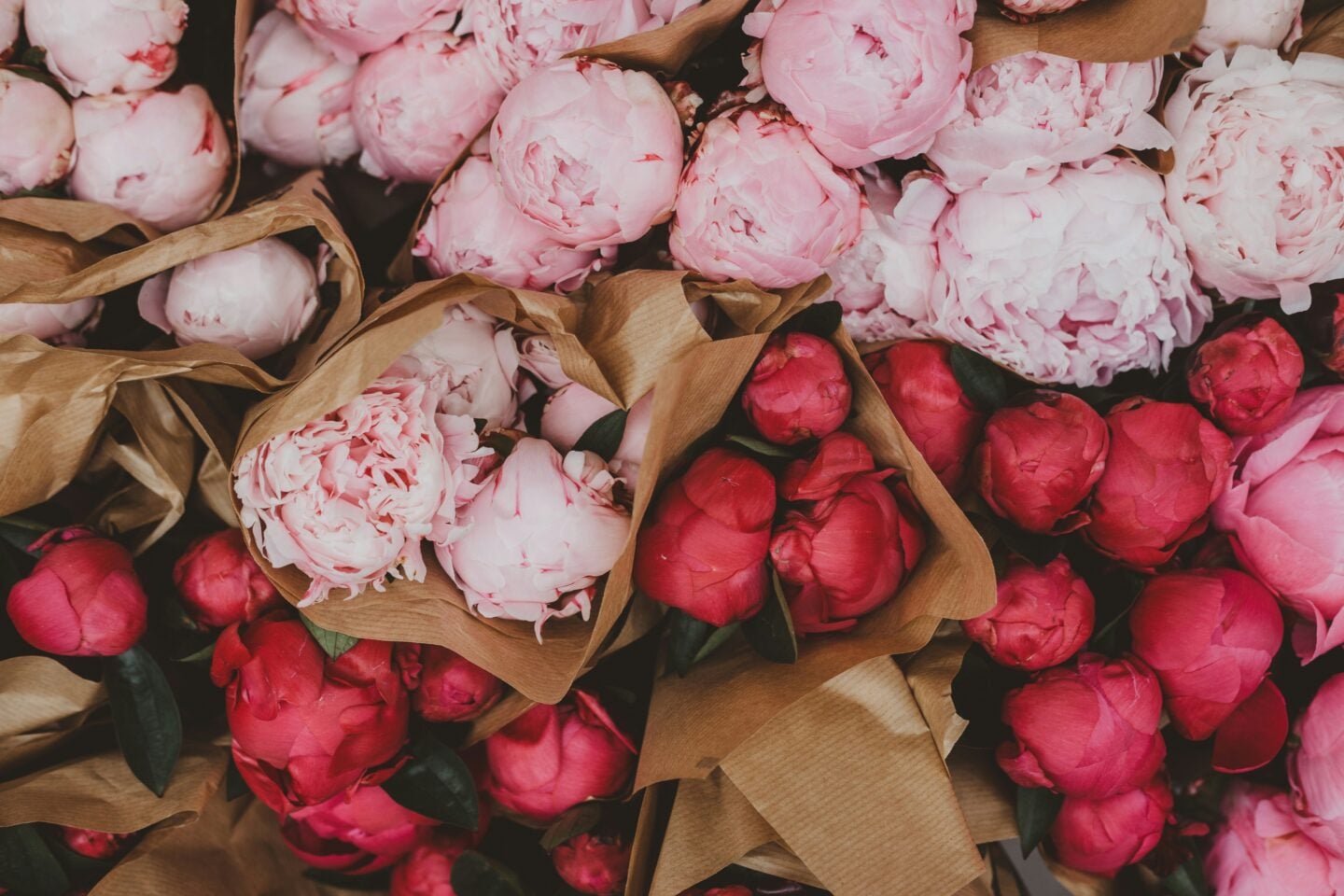
Mass flowers are your primary focal blooms – large, round, or full flowers that draw the eye and establish the arrangement’s color palette. Roses, peonies, carnations, dahlias, and chrysanthemums all fall into this category. These typically command attention and determine the overall aesthetic.
Line flowers provide height, direction, and structure. These blooms grow along a linear stem, creating vertical or curved lines. Snapdragons, gladiolus, delphinium, and stock are classic line flowers. They’re essential for establishing the arrangement’s shape.
Filler flowers are smaller blooms that fill spaces between your focal flowers and add texture. Baby’s breath, statice, waxflower, and aster serve this purpose. While often underestimated, filler flowers create fullness and a professional finish.
Foliage and greenery complete the picture, providing background, contrast, and structure. Ferns, eucalyptus, and ruscus give the arrangements depth and frame the flowers.
Understanding these types of flower categories helps when working with flower arrangement ideas:
- Color theory application: Use mass flowers to establish your primary color, line flowers to introduce complementary hues, and filler to add subtle accents. This creates depth rather than flat color schemes.
- Textural contrast: Combine smooth mass flowers like roses with spiky line flowers like snapdragons and airy filler like baby’s breath. The contrast between textures creates visual interest.
- Proportional balance: A general guideline is 60% mass flowers, 30% line flowers and greenery, and 10% filler. This ratio creates complete arrangements without overwhelming elements.
Seasonal availability also affects the types of flowers in bouquets. Spring brings tulips and ranunculus. Summer offers sunflowers and dahlias. Fall showcases chrysanthemums, while winter features amaryllis.
Types Of Flower Bouquets – From Hand-Tied To Presentation
The types of flower bouquets you encounter vary significantly in structure, purpose, and presentation style. Each type serves different occasions and achieves distinct aesthetic effects.
Hand-tied bouquets are the most versatile and popular style. These arrangements feature stems spiraled and secured together, designed to be placed directly into a vase without rearrangement. Hand-tied bouquets work for virtually any occasion – from casual gifts to formal celebrations.
Presentation bouquets take hand-tied designs further with elaborate wrapping, often using cellophane or decorative paper. These are meant to be given as gifts and make an immediate visual impact. For those seeking quality and convenience, fresh roses delivery services often feature presentation bouquets that arrive ready to impress.
Cascading or shower bouquets feature flowers and greenery that flow downward in a waterfall effect. These dramatic arrangements require greater technical skill, as the flowers must be wired to maintain their flowing shapes.
Here are additional types of flower bouquets to know:
- Nosegay arrangements: Historic style featuring tightly clustered blooms with stems cut very short, creating an almost spherical appearance. These dense arrangements pack maximum color into minimal space.
- Arm sheaf bouquets: Long-stemmed flowers arranged to be cradled in the arm rather than held by hand. These loose arrangements showcase the full length and beauty of stems, perfect for tall flowers like calla lilies.
- Composite bouquets: Artistic creations where individual petals are wired together to form one giant “flower.” Rose petals are most commonly used, creating a dramatic effect popular for high-end weddings.
Understanding these types of floral arrangements helps you communicate clearly with florists and set appropriate expectations.
Form In Floral Design – The Structural Blueprint
Form in floral design refers to the three-dimensional shape your arrangement takes in space. This structural element is fundamental to creating visually pleasing compositions that feel balanced and intentional.
A symmetrical triangle is one of the most traditional forms. The arrangement creates a triangle shape with a strong vertical center stem and sides that taper downward at equal angles.
An asymmetrical triangle follows similar principles but with unequal sides, creating dynamic visual interest. One side extends further than the other, producing a more modern, casual feel.
A round or circular form creates a dome-shaped arrangement that looks attractive from all angles. These are ideal for centerpieces since they work on tables where people sit all around.
Horizontal or linear form spreads across a surface rather than rising vertically. These low, elongated arrangements suit long dining tables or mantels where height is restricted.
Form in floral design principles extends to more creative shapes:
- Crescent form: A curved, moon-shaped arrangement that creates elegant, flowing lines. Popular for formal events, crescents work beautifully when you need visual impact but have limited depth.
- Hogarth curve: This flowing S-shape creates dynamic, elegant movement. The arrangement curves upward, then down and back up again, requiring flowers with flexible stems.
- Vertical form: Tall, narrow arrangements that emphasize height over width. These use strong vertical line flowers to create striking, modern statements.
When working with flower arrangement ideas, form should be your first consideration. Choose a form that complements your space.
Basic Flower Arrangement Designs – Core Techniques

Mastering basic flower arrangement designs gives you a toolkit for creating professional-looking arrangements regardless of flower type or occasion.
The spiral technique is essential for hand-tied bouquets. Hold the first stem vertically, then add each subsequent stem at a slight diagonal angle in the same rotational direction. This creates a spiral pattern that allows the bouquet to stand on its own.
Foam-based design uses floral foam soaked in water as both structure and water source. Insert stems into the foam at various angles to create your desired form. Foam allows you to build arrangements that defy gravity.
The chicken wire method is an eco-friendly alternative to foam. Crumple the chicken wire loosely in the vase, creating a support structure that holds the stems while allowing water to circulate.
Here are the key basic flower arrangement design principles:
- Focal point establishment: Every arrangement needs a visual anchor. Place your largest or most vibrant bloom slightly off-center and lower than other flowers. Build the rest around this focal point.
- Layering and depth: Avoid flat arrangements by placing some flowers deeper and others extending forward. Vary stem lengths significantly to create dimensional layers.
- Odd number rule: Use 3, 5, 7, or 9 of each flower type rather than even numbers. Odd numbers create more natural, dynamic arrangements.
Flower Style – Defining Your Aesthetic

Flower style refers to the overall aesthetic approach and mood your arrangements convey. While form and technique provide structure, style infuses personality and establishes emotional tone.
Modern minimalist style emphasizes clean lines, negative space, and restraint. These arrangements use few flowers – sometimes just one or two dramatic stems – with a focus on architectural form. Popular flowers include calla lilies, anthuriums, and orchids. This flower style suits contemporary interiors.
Romantic garden style brings lush, abundant beauty reminiscent of English cottage gardens. Roses, peonies, ranunculus, and sweet peas in soft pastels create dreamy arrangements. The overall effect feels picked from the garden rather than formally structured.
Rustic farmhouse style features wildflowers, sunflowers, wheat, and seasonal materials in simple vessels like mason jars. The aesthetic is warm and approachable, celebrating natural beauty. Colors tend toward warm oranges, yellows, and deep reds.
Tropical style showcases bold, exotic flowers such as orchids, protea, and heliconia, alongside dramatic foliage. Colors are vivid – hot pinks, bright oranges, deep purples. This style makes strong statements and suits modern spaces.
Consider these additional types of flowers in bouquets by style:
- Classic formal: Symmetrical arrangements in traditional forms using refined flowers like roses, lilies, and carnations. Colors are typically monochromatic. These suits are suitable for corporate settings and formal dining.
- Bohemian eclectic: Mix-and-match combinations that break traditional rules, combining unexpected colors and textures. Dried elements and grasses create free-spirited, artistic arrangements.
- Seasonal natural: Arrangements that highlight flowers specific to each season. Spring tulips, summer zinnias, fall chrysanthemums, winter evergreens. This style connects arrangements to natural cycles.
Your personal flower style might combine elements from multiple categories. Understanding these frameworks helps you communicate with florists and create arrangements that truly reflect your taste. When you combine knowledge of flower types, bouquet structures, design forms, and personal style, you gain confidence to create or select floral designs that are both technically sound and aesthetically meaningful.
Thanks for stopping by!
Magda
xoxo
<3